Designed to work across standard IP connectivity, SSL's OSC integration is quick to deploy and enables broadcasters to map System T's extensive feature set to any OSC-compliant mixer or controller, allowing remote access to System T functionality via any number of third-party connectors.
"As broadcast workflows evolve, control needs to be increasingly flexible," says SSL Product Manager Berny Carpenter. "System T already allows multiple control surfaces to connect with one another and SSL’s fully-featured Tempest Control App (TCA) also provides full, comprehensive control of any DSP engine in a studio or remote location. But as distributed workflows become more commonplace, remote operators often need just a limited amount of control to manage specific elements of the audio chain.
"Comprehensive OSC integration opens up SSL's functionality to remotely control System T console parameters without requiring dedicated SSL hardware, making throw-down systems much easier to deploy using a variety of external devices. For example, a remote operator at a venue might just need console monitor functionality or access to select local faders – all that can be controlled via a compact hardware controller for smaller setups. That flexibility becomes a real benefit in environments wherever and whenever operational flexibility is desirable."
The integration enables direct third-party control of a wide range of parameters including faders, mutes, PFL, AFL and path labels, and can be expanded to any other console functionality that is available as part of SSL's established Event Manager feature-set. Native support of OSC inputs and outputs in Event Manager means that OSC messages can also be used to trigger and respond to events alongside traditional external control signals like GPIO, Ember+ or MIDI. Native OSC support for scene automation also allows scenes to be fired directly by number to make life easier for broadcasters using snapshot-style recall. Another key feature is the addition of external mic preamp control to provide control of SSL's entire Net I/O ecosystem, allowing users to set the gain of any SSL preamp via TCA using OSC.
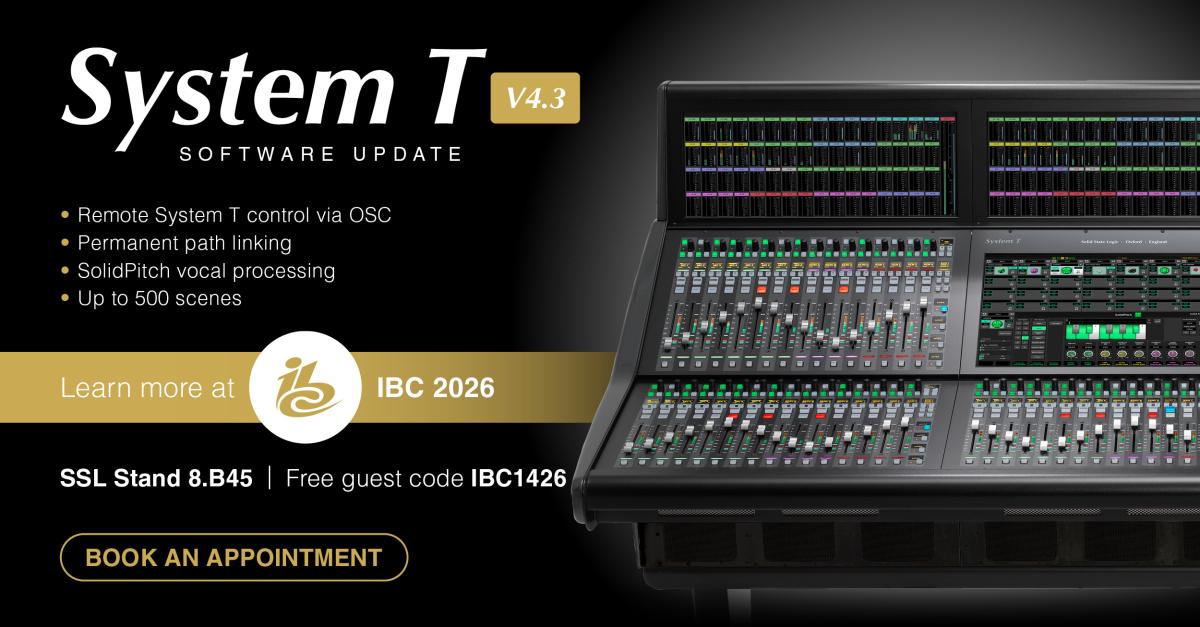
In addition to its comprehensive OSC integration, SSL is introducing a range of new features across the entire System T platform at IBC, including several user-friendly updates to the System T meter bridge as well as upgraded path and bussing structures.
For more immediate operator feedback, SSL will demonstrate a follow active fader bank option for meter bridge sources on the S500/S500m consoles, providing dynamic metering for any combination of sources and surface layouts. Meanwhile, operators can now incorporate SSL’s revered Bus Compressor Effect Meter directly onto the meter bridge to ensure overall dynamic range is always front of mind without having to divert their eyeline.
Designed for large-scale theatre and broadcast productions that need higher bus counts, System T V4.3 also extends SSL's bussing architecture. Track buses now support the same independent per-channel send level flexibility as stem and aux buses to increase the number of independently controllable sends available to users across a show.
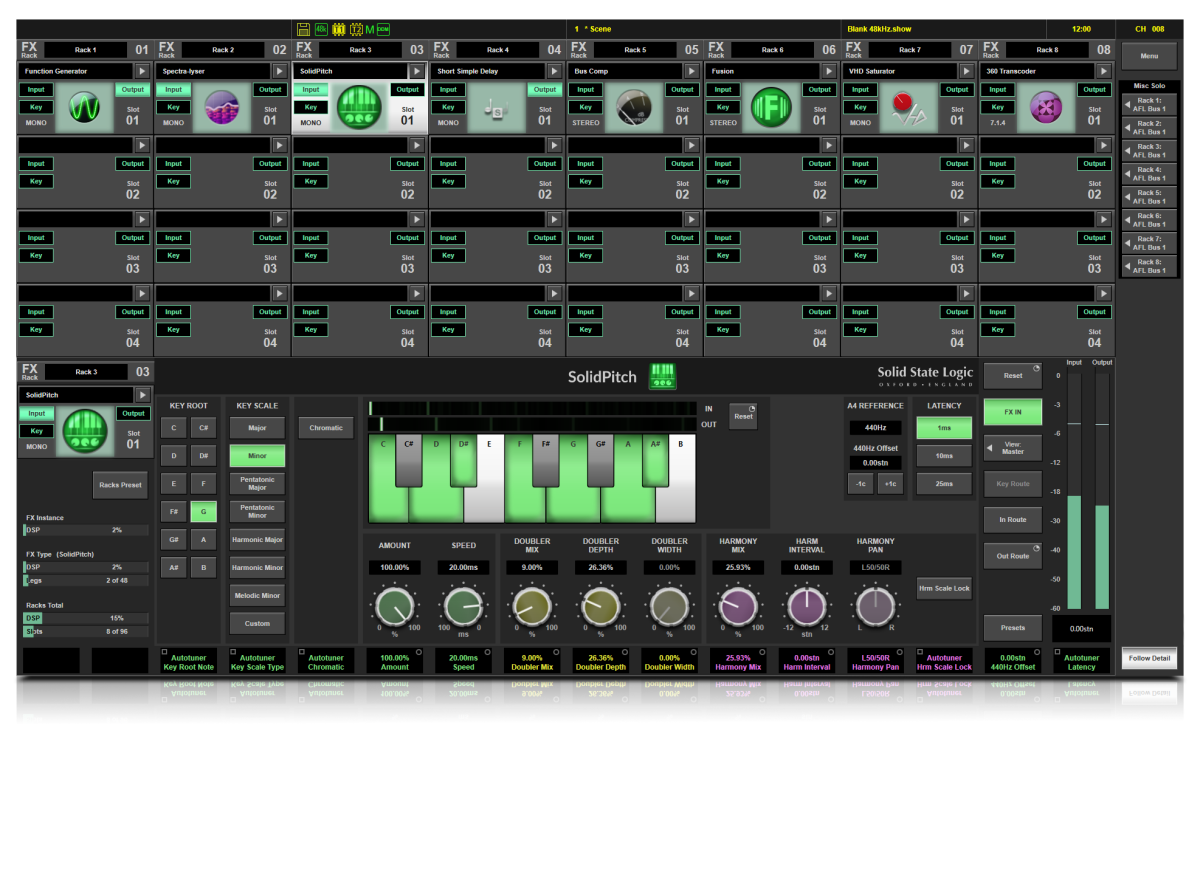
SSL has also integrated several of the features from its Live console ecosystem including Permanent Path Linking and SolidPitch. Enabling users to set up to 48 permanent “link groups” between paths in the same way as temporary Path Links, Permanent Path Linking links the parameters of a set of paths while applying independent filters wherever they are needed. The update also increases showfile capacity to up to 500 scenes, making it well suited to the demands of complex theatre productions and broadcast entertainment shows.
Solid State Logic looks forward to meeting its customers and partners at IBC 2026 and will be offering live demonstrations during each day of the show. To learn more, register for IBC, or book an appointment with an SSL broadcast expert, please visit SSL's IBC Events page.

 VIEW MEDIA