Live Sound, Music & Audio Production
21/10/26
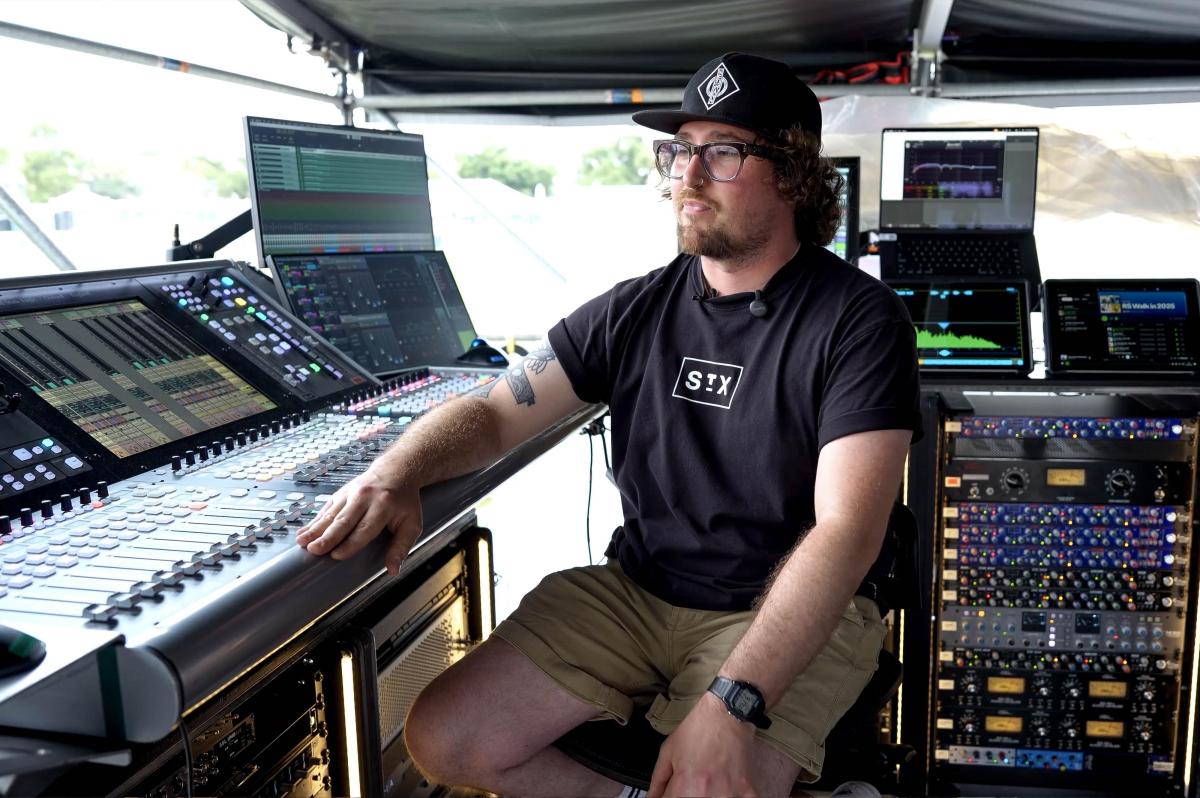
London, U.K., 21st October, 2026 — Jonny “Famous” Williams, front-of-house engineer for Sir Rod Stewart for the past two and a half years, recently switched to a Solid State Logic Live L650 mixing console supplied by Sound Image, a Clair Global Group company. Williams, who has also worked with RAYE, Central Cee and Thundercat, has additionally outfitted his racks on with SSL’s Super 9000 and Revival 4000 channel strips, the UMD192 digital audio interface and THE BUS+ compressor.
Williams first began using SSL mixing consoles about eight years ago, he says, and previously owned two that were installed at his home in the U.K. “When I had the opportunity to switch to SSL I only really had two choices — either the L550 Plus or the L650, due to the capacity I needed. I went for the L650 because I like its layout.”
Put 'anything anywhere' with SSL Live
The L650 offers three fader bays across the full width of the console. “I like the three fader banks because I’m very hands-on with the faders, even with a lot of automation involved. The transition from my previous console was also very straightforward,” Williams explains. “One of the great things about SSL Live, a platform I know inside out, is its flexibility. You can put almost anything, almost anywhere. Every Fader Tile can be configured in the same way, allowing me to scroll through banks and layers to access whatever I need. In the very unlikely event that I lose a fader or even an entire tile, I can still access that path elsewhere on the console. That’s a really cool feature.”
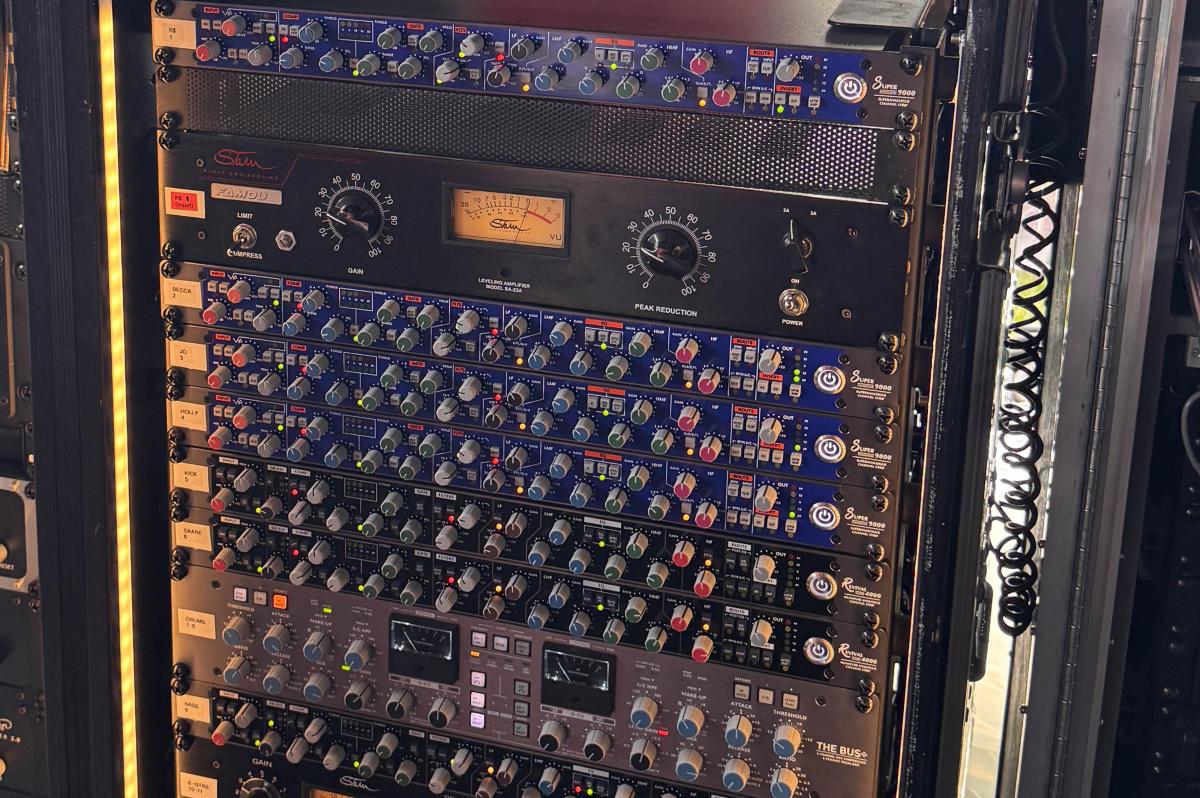
In his FOH rack, Williams has four SSL Super 9000 SuperAnalogue™ and three Revival 4000 all-analogue channel strips. “I like having physical controls for important things, so all of the Super 9000s are for vocals. I've got the Revival 4000s on kick and snare, and on bass. And there's an SSL THE BUS+ compressor on the drum group.
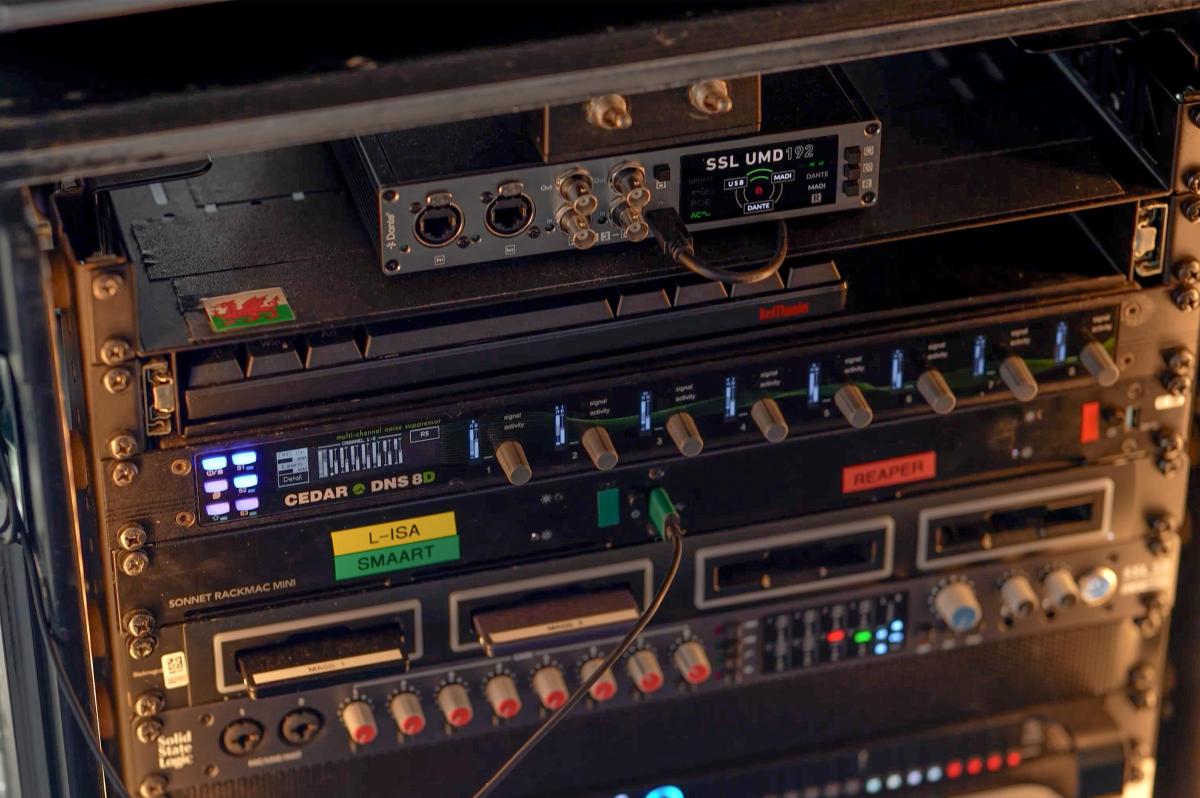
We've also got a UMD192 USB/MADI/Dante audio interface, which I use for all my multi-track recording and playback, and there's an SSL 18 audio interface that I use for integration with my SMAART® rig for system analysis,” he reports. A pair of MADI Opti-Coax boxes provide conversion between the L650 and the rack gear. “So I've got lots of fancy SSL toys in this rack,” he says.
SSL ML 32.32 MADI stageboxes and SOLSA
Four SSL ML 32.32 MADI stageboxes send 122 inputs to Williams at FOH via a Blacklight II Concentrator, with a split also feeding the monitor console . Transport at the stage is over fibre with eight SSL MADI Opti-Coax units handling format conversion.
Williams is also running the SSL On/Off-Line Setup Application (SOLSA), a standalone version of the SSL Live console software. “We've got a Remote Tile and there's a little PC mounted on the back of it running SOLSA.”
He is making extensive use of the L650’s internal effects in his mix. “I use the Enhancer quite a lot, especially on drums. It can really make your drums cut through if they sound a little bit flat. The Effects Rack has got a model of a bass amp, which is really cool. We don't have a bass amp; the bass goes straight to a wireless system and into the preamp, so I want to give it a bit of vibe. I use Dynamic EQ on everything, including vocals, guitars and fiddles. Then there’s the Sourcerer, which I use on all the vocals, just to clean them up.” Williams also uses a server that he built himself to host SSL FlexVerb and Digicrush plug-ins.
Harnessing SSL Live's powerful workflow
Williams also highlights the flexibility of SSL Live’s processing architecture. “One very cool thing about the SSL Live’s workflow is that you can chain effects, then chain that to something external, which I do, and then bring it back as part of the same chain. I also have backups for a lot of my external effects, so if something were to fail in the rack, I've got a button that can switch to all the internal SSL effects.”
Williams is taking full advantage of the Live console’s automation capabilities on the tour. “The automation is very comprehensive, so I've got a lot going on. I've got certain parameters changing on certain songs only, because there are so many different instruments here and people swapping instruments. It's very versatile.”
Williams has integrated the SSL console’s Event Manager with a Stream Deck that enables him to quickly fire off various changes. “For example, I've got a load of VCAs assigned to different musicians. I might push the guitar a little bit during a solo, then I've got a button that resets all my VCAs back to zero before the next song. I've got another handy button that turns the effects down between songs, just to keep a bit of a vibe. I press it again and it turns them back up.”
Managing stems in SSL Live
Williams typically groups his inputs using Live’s Stem buses. “I've got two kick drum mics, so I put those into one stem. I've got two snare mics, so I put those into one stem. Then I'll do most of the processing on the stem. A stem is not like a group on other consoles, where you send an input to the group at 0 dB. With a stem, it's variable; you can send it at 0 dB if you want, or you can send it at a lower or higher level. It's good for doing things like parallel drum compression, where you don't want your cymbals going in at zero and mashing everything up. You can keep them back a little bit and let the kicks and toms be more present in that stem. That's a handy feature,” he says.
“I also use stems for some of my effects, allowing me to handle the send and return on the same stem and put the effect as an insert on the stem, so I've got it just on one fader. That's also really handy.” That said, “I still do some effects the old-school way, where I've got a send on an auxiliary and bring it back into a channel return,” he adds.
Williams has his mix set up with two master buses, one feeding the PA, and the other providing a dedicated broadcast mix when required. “The broadcast mix has a different limiter, and I also send the reverbs differently. If we're in a cavernous arena, I tend to pull the reverbs down or, if it's a stadium, I sometimes turn them off completely. But I don't want that to affect the broadcast, so I've got two main reverb masters, one for the room and one for broadcast, even though it's the same effects going into each. That means I can adjust them independently.”
Summing up his experience with the Live L650, Williams says, “There's just so much versatility in this board that you can do pretty much anything.”
Visit Solid State Logic at AES Nashville
Solid State Logic looks forward to meeting its customers and partners at AES Nashville 2026 and will be offering live demonstrations during each day of the show. To learn more, register for AES, or book an appointment with an SSL expert, please visit SSL's AES Events page.
Learn more about SSL Live or request a demonstration by clicking the button below.

 VIEW MEDIA