Live Sound, Broadcast
15/07/26

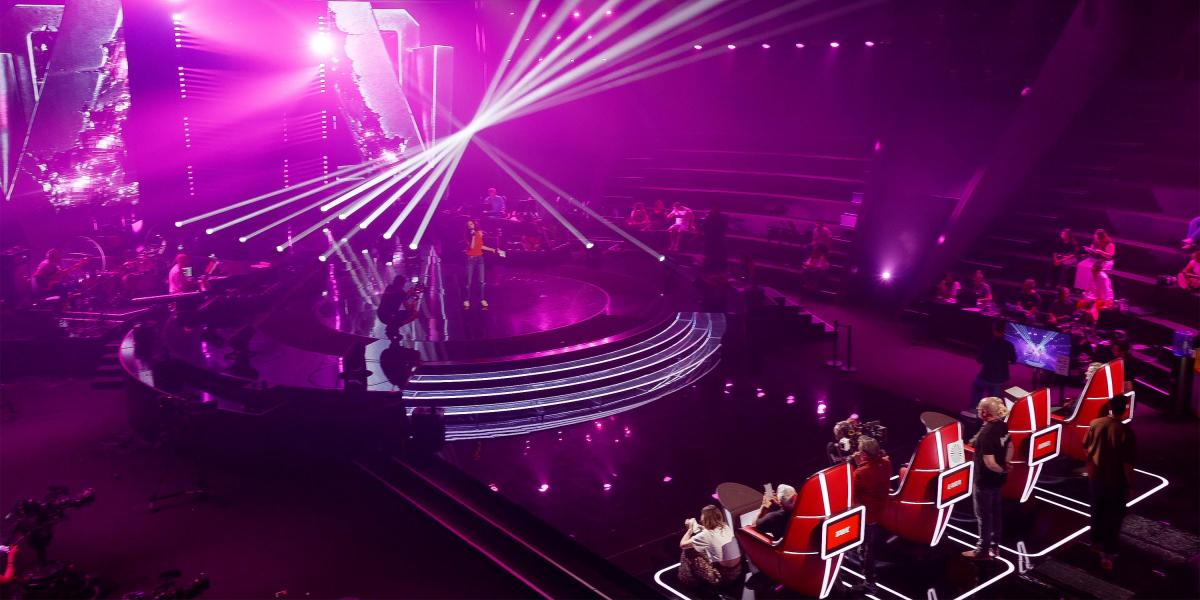
Paris, France, 15th July, 2026 — The fifteenth season of French reality singing competition The Voice – La plus belle voix came to an end on May 30 when 19-year-old Lady O from Switzerland was crowned the winner. Broadcast on French commercial television network TF1, the show’s audio production featured four Solid State Logic Live L550 Plus mixing consoles — two for broadcast, one at FOH and another for monitors — all linked over SSL’s Blacklight II MADI system, and supplied by professional sound, video and lighting control solutions provider Algam Enterprise. The entire broadcast was made possible by touring events and integration specialist S Group, based in Alès, France.


“The ease of use with this console lies precisely in being able to bring sources back very quickly to wherever you want them and, with the multi-layer system, to organise your layout properly so you can find your way around very easily and follow the show as consistently as possible.”
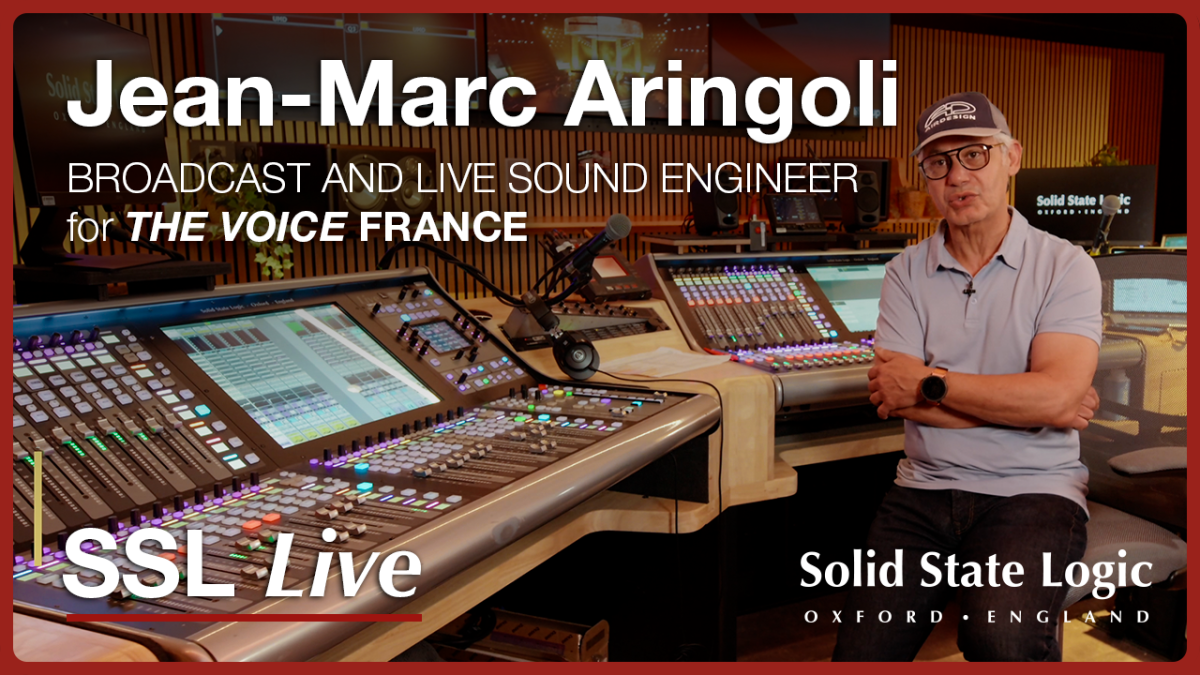
Jean-Marc Aringoli, Broadcast and Live Sound Engineer for The Voice France

Four consoles, one coherent system

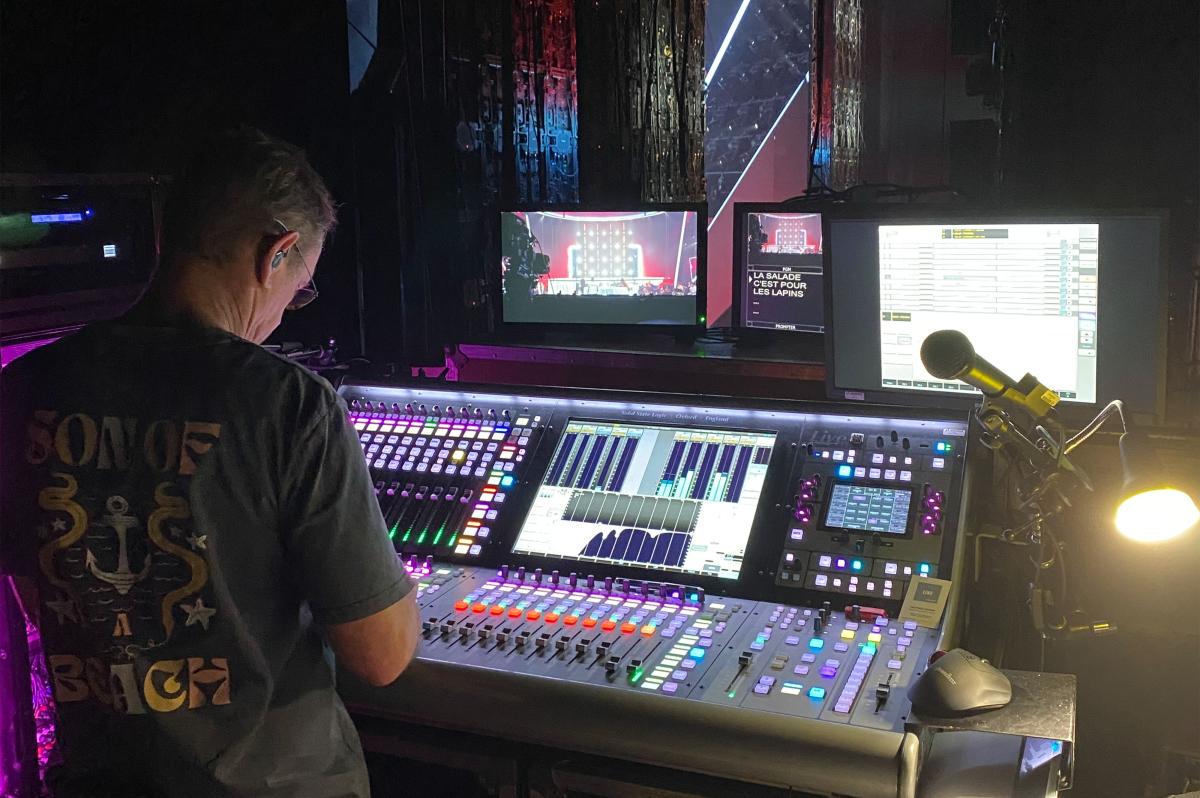
Rather than collapse the production onto fewer surfaces, the team distributed the workload across four L550 Plus consoles, each with a clearly defined role. At monitors, the console serves the musicians and singers directly. "It is the monitor console that sends out sources — mainly everything to do with the orchestra and music — and it sets the gains for us," explains Jean-Marc Aringoli, Broadcast and Live Sound Engineer for The Voice France. The other positions receive that digital feed ready to mix, which keeps the signal flow clean and consistent across the whole chain.

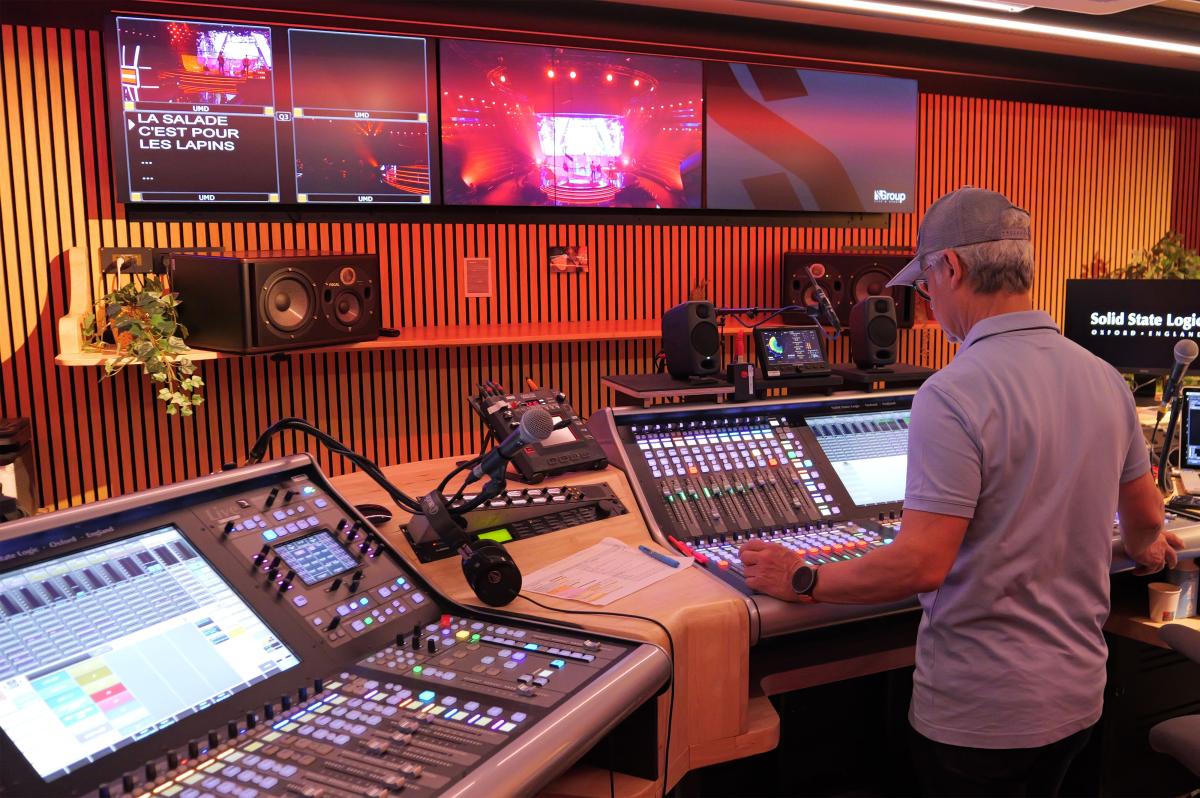
In the audio control room at Studio du Lendit in Paris, the two broadcast consoles split the workload. One primarily handled the music mix. "The other console handled the final mix, taking the stereo output from the music console, onto which all the vocals, backing vocals, additional instruments, and various other elements required for a television show were layered,’" says Jean-Marc Aringoli. Separating the music build from the final assembly gives the team room to process each stage independently and keep the all-important vocal sitting cleanly out front.


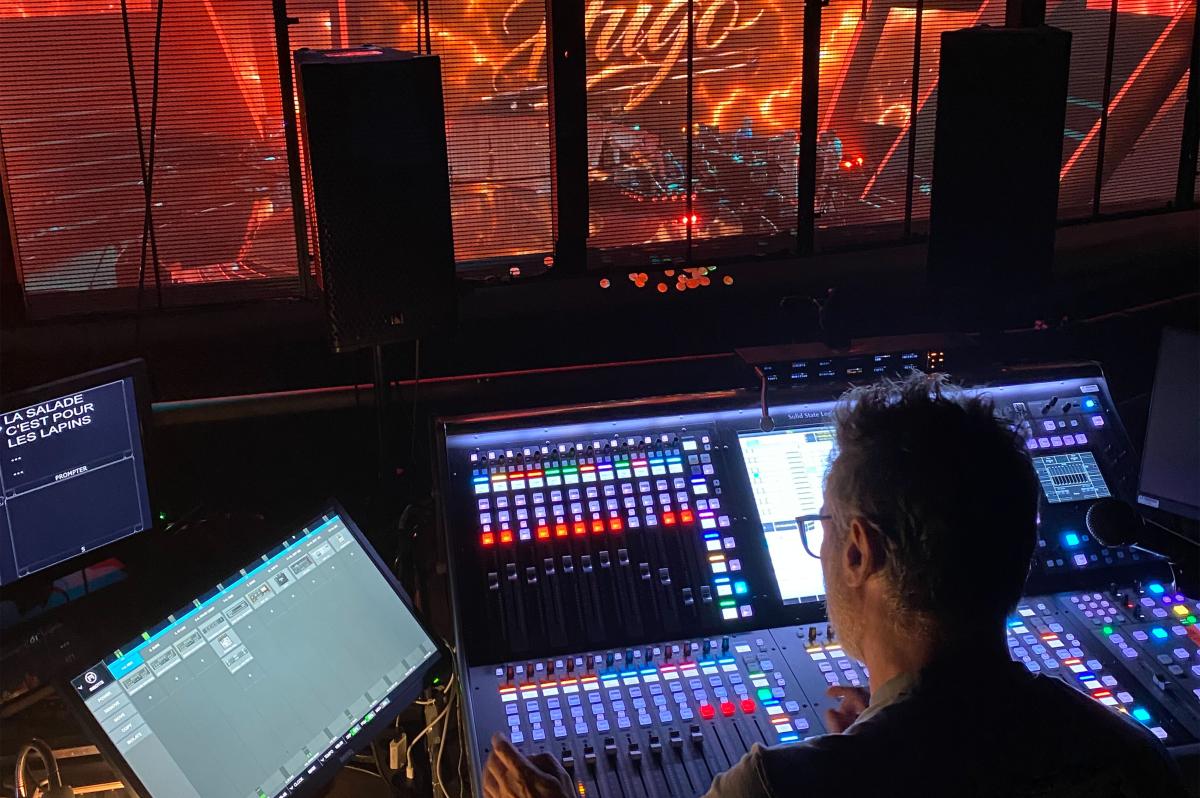
That division of labour is also what lets Jean-Marc Aringoli react instantly to the one element that matters most. Because contestants’ vocals are being judged both in the TV studio and by the viewing public, the voice must always be present and out front in the broadcast mix. “The monitor console sends out sources — mainly everything to do with the orchestra and music — and it sets the gains for us. The only thing where I have control over preamps at FOH is the vocals. That is what I need in order to react very quickly — to have control over the gains to provide the broadcast with a level that is consistent with the loudness requirements.” With monitors setting and owning the orchestra gains, FOH and broadcast are free to concentrate on the vocal.


Sharing resources and securing the show over Blacklight MADI

Linking all four consoles over Blacklight II MADI does more than simplify routing — it turns the four surfaces into a single, resilient system in which sources and processing can be shared on the fly. "Sharing resources is very easy with SSL, where we share MADI," says Jean-Marc Aringoli. Two redundant fibres run from the set, and the broadcast position can pull the orchestra mix and open microphones straight from the core should anything fail mid-show, with a reverb permanently primed and ready. "It is a way of duplicating our sources and securing things," he notes.

Those same links allow the engineers to back each other up in real time. On one occasion, with the monitor engineer fully occupied, Jean-Marc Aringoli was able to send an effect across the network so it could be opened to an artist immediately. The team has also created string premixes to relieve FOH, sending four consolidated string items rather than 20 individual channels. "Those exchanges are possible, and we can imagine backing things up through these many exchanges between the consoles," he says.


SSL Live: Easy to use and 'beautiful on air'

The Voice being a live show, Jean-Marc Aringoli appreciated a flexible console on which he could react quickly. “The ease of use with this console lies precisely in being able to bring sources back very quickly to wherever you want them and, with the multi-layer system, to organise your layout properly so you can find your way around very easily and follow the show as consistently as possible.”

Because the vocal is always out front, he continues, “That often forces me to wrap the voice as much as possible to make it sound as beautiful as possible on air. We have a certain number of effects available in the console, and those are stored in the console.

Managing effects and stems

Jean-Marc Aringoli uses only internal console effects to manage the orchestra. “Everything is done internally with the Effects Rack. The whole orchestra is managed with effects, both in terms of dynamics and pure effects such as reverb, gate, delays and so on. The idea is also to build an Effects Rack on which, for example, I can control all those delays with a given tempo that I trigger from a key that I have assigned.”

On the broadcast side, all sources generally go through the L550 Plus console’s stems that are also reprocessed, both dynamically and with EQ. “That can be through external processing, because we also have an A/D rack into which things are inserted. The idea is also to put the whole chain in phase in a general sense. All these stems then go to the master, which is also processed internally and externally, both in terms of dynamics and correction, or through inserts that are placed on the chain,” Jean-Marc Aringoli reports.


Managing a fast-moving live entertainment workflow

The central challenge is delivering the cleanest possible sound to air while meeting broadcast loudness requirements against the high SPL of the show's audience mix. “For FOH, we are really in a concert system, so there is a very high sound level, which is also a request from production and from the musical director,” he comments. “We only have coaches who perform live. They are used to a certain sound level, and we have to provide them with that sound level. So we work fairly loud.”


With the console settings for each song saved as a snapshot scene, and as many as 130 rehearsed songs, Jean-Marc Aringoli relies on the Live console’s Query function to verify the selected signal flow and levels as he selects the next scene. I quickly check with Query on my send to know what is going to be sent, for example, in an auxiliary to an effect. It lets me very quickly check what is going into my stem and redo the levels easily. In fact, it is going to lay out for me what is going into that system, and I can very quickly see how, for example, the machines are balanced and be able to rebalance them very easily, and always remain in a mix without having lost mix mapping in the moment. So Query is a very, very good tool.”

The flexibility across four linked consoles is exactly what makes the SSL Live platform such a natural fit for Live Entertainment television. "Seeing our consoles adapted so successfully to high-pressure broadcast environments like The Voice is a real testament to the flexibility of the platform. Productions like this are continually pushing the technology in new directions, and that is precisely what makes the SSL Live system so rewarding to work with," said Philippe Guerinet, International Sales Director at Solid State Logic.

Related Media