Ultimate Broadcast Production

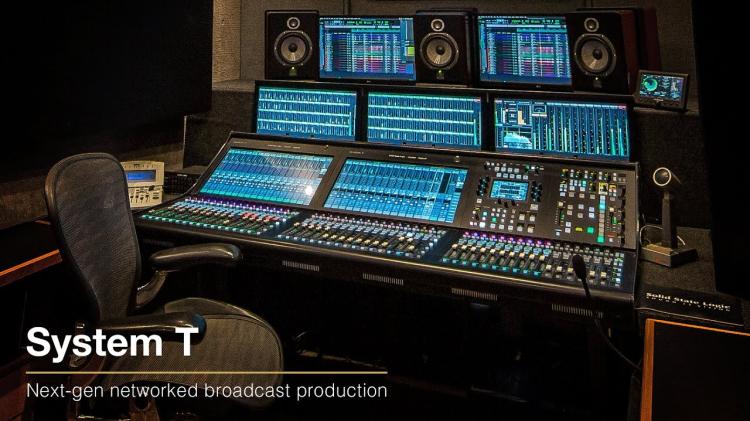
System T is a new generation of dedicated audio production systems from Solid State Logic, designed to meet the demands of modern workflows across broadcast, live and studio environments. Built to address the unique challenges of contemporary production, whether on premises, remote, distributed or cloud-based, System T delivers a fully networked, scalable and flexible platform for high-performance audio.

From traditional broadcast applications such as sports, news and entertainment, to live event spaces, theatres and houses of worship, System T provides the power and reliability needed for mission-critical productions. Its advanced architecture also supports music recording and mixing, live sound reinforcement, cloud production workflows and immersive streaming applications, enabling seamless operation across diverse production scenarios.

For more than 50 years, SSL has been at the forefront of professional audio innovation. Drawing on decades of research, engineering excellence and customer feedback, System T represents the next evolution in audio production, combining broadcast-grade precision with the flexibility required for today’s converged media landscape.

The three main elements of the System T platform


Control Surfaces

System T control surfaces include a range of modular, fixed-format, standalone and desktop options designed to meet any production requirement. Surfaces can be used individually or seamlessly combined to create tailored, scalable solutions for virtually any application or environment.

Audio Processing

System T Tempest Engines leverage patented Optimal Core Processing (OCP) technology to power SSL’s acclaimed processing, routing and workflow capabilities. Available as both high-performance hardware appliances and software-based engine solutions, Tempest Engines provide flexible deployment options for on‑premises, remote and cloud-based production environments. Designed for mission-critical operation, they support scalable configurations and comprehensive redundancy schemes, ensuring seamless failover and uninterrupted performance in the most demanding live and broadcast applications.

I/O & Interfaces

The System T Network I/O range provides a fully interoperable, AoIP-driven routing and I/O architecture, featuring native Dante and ST 2110 with NMOS control, alongside seamless integration and control of Dante-based I/O devices.

Control Surfaces

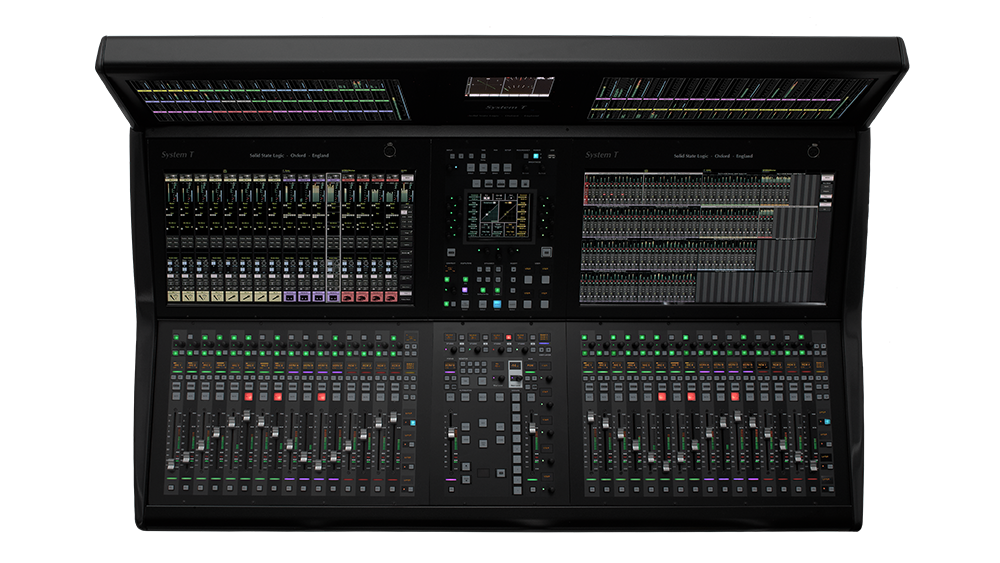
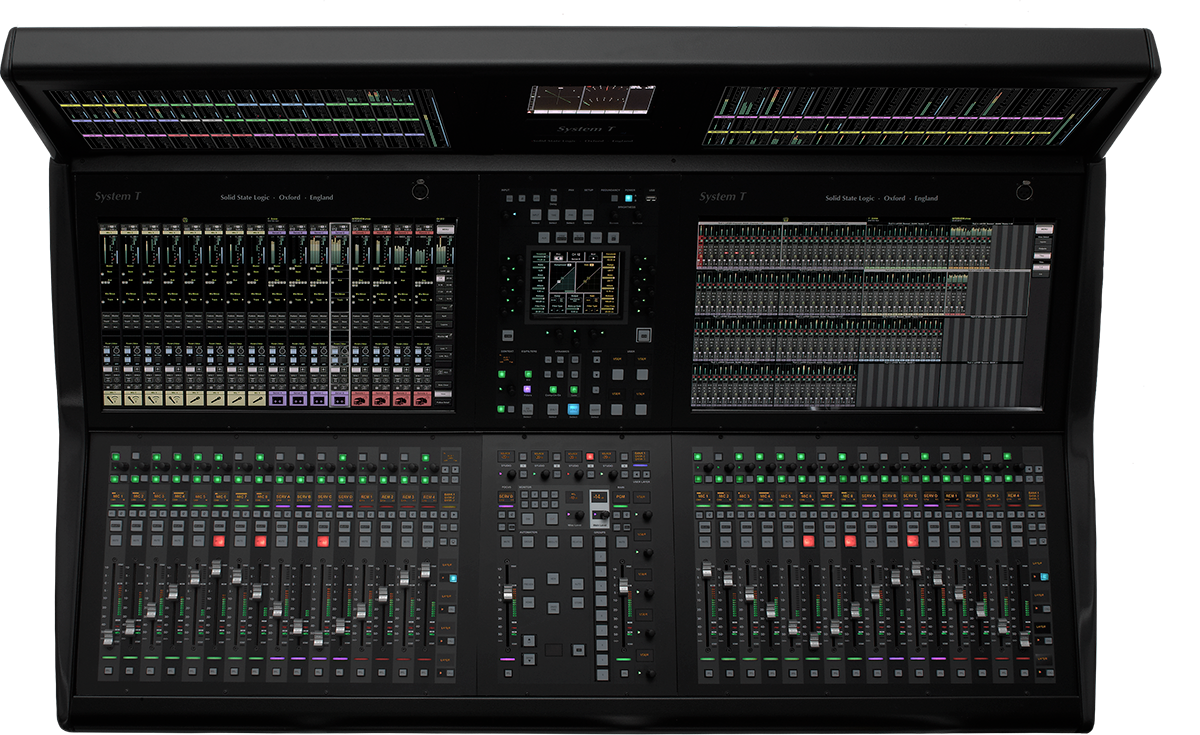
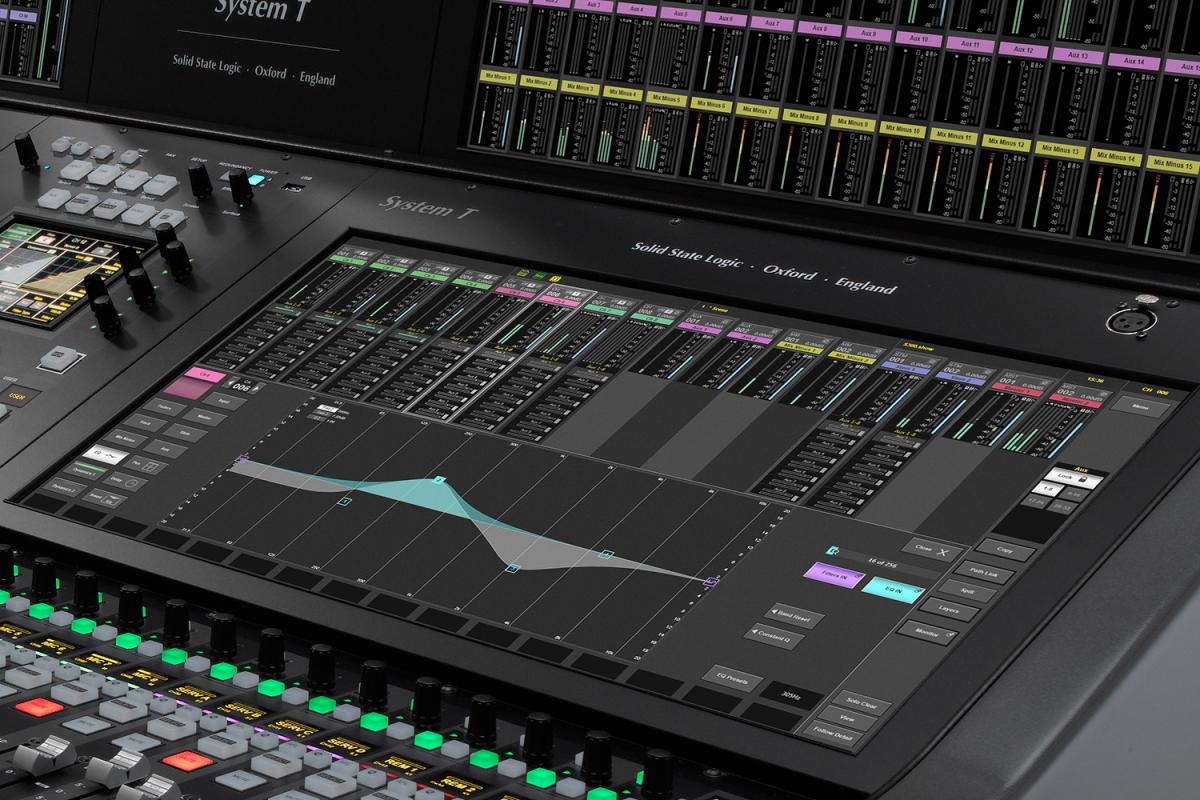
System T offers a full range of hardware and software control interfaces that can be combined in a wide variety of ways to create precisely the right system for each installation or application. Each System T control interface offers a combination of traditional broadcast production workflow and new ways for operators to control their audio environment. SSL’s deep experience with control surface ergonomics has delivered an interface that unites gestural touch screen technology, hardware control and intelligently designed workflow. It accommodates a range of working styles so that mixing engineers from a variety of backgrounds can immediately benefit from its advanced capabilities.


Tempest Control App, Fader Tiles and TCA Tour

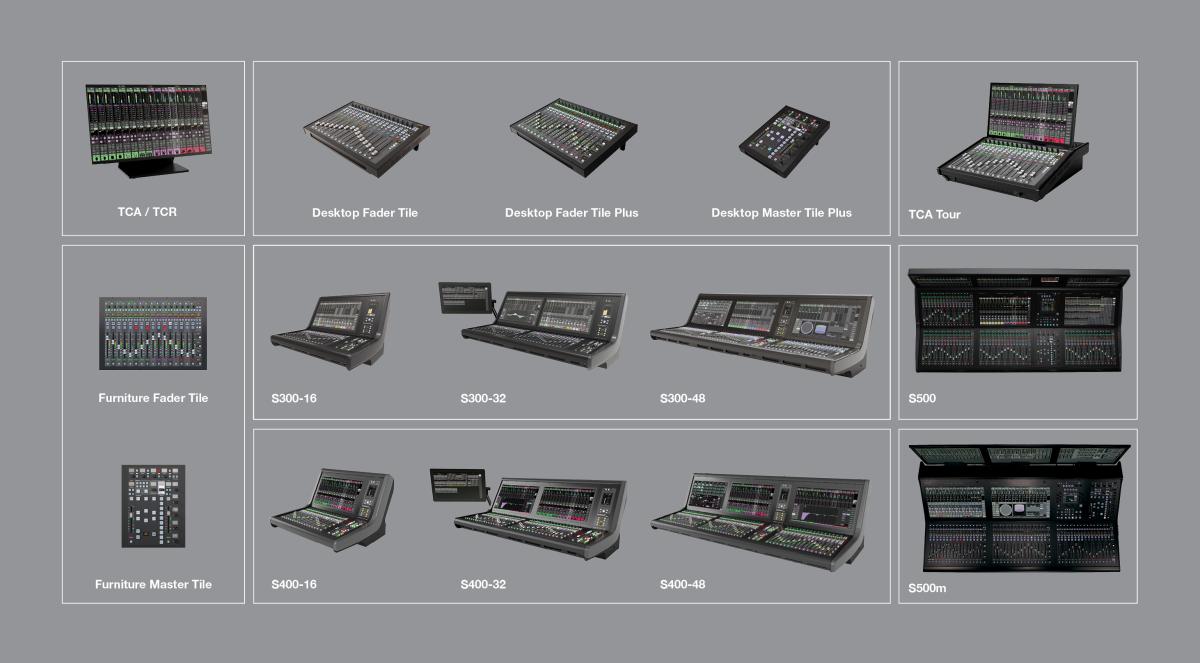
Touch screens, Fader Tiles, and the Tempest Control App can be combined to create workstations for use in smaller breakout production rooms. TCA Tour combines those three elements into a single and fly-away audio production system designed for broadcast and touring.

S300

The streamlined Fader Tile configuration, touch screen technology and condensed Master Section provide more than enough control for boutique broadcast applications. The S300 comes in three versions ideally suited for smaller format environments: 16, 32 and 48 faders. 

S400

Compact frame control surfaces with premium faders, a dedicated OLED display for every path, advanced level metering and status LEDs covering dynamics, automix and external control. Available in 16, 32 and 48 fader configurations, with 1, 2, or 3 large multi gesture touch screens.

S500 & S500M

Scalable and customisable modular control surface available in a range of frame sizes and bay configurations. Flexible meterbridge options, dedicated master section hardware, multiple large multi-gesture touch screens, integrated KVM. S500 is available in up to 384 fader configurations. 


Processing


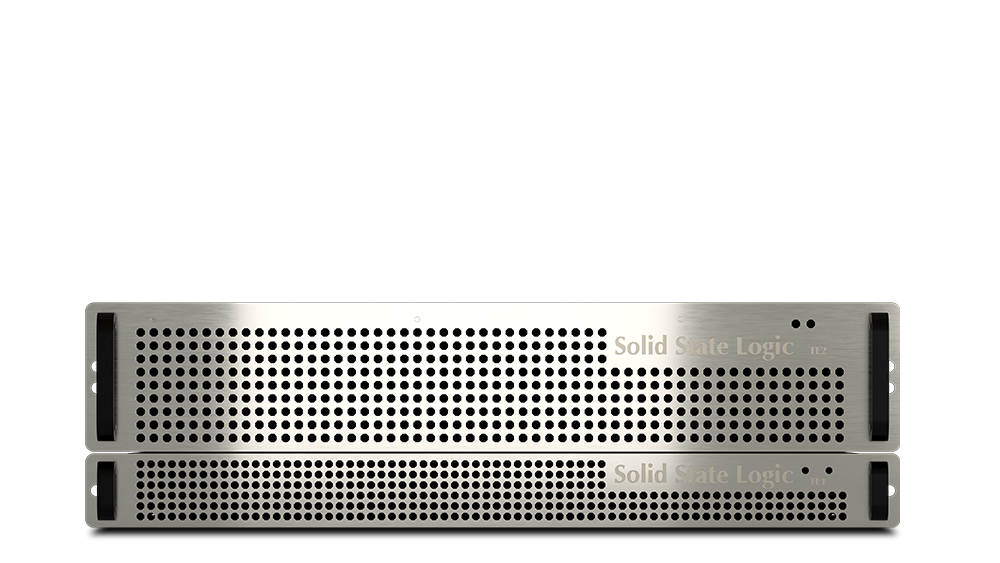
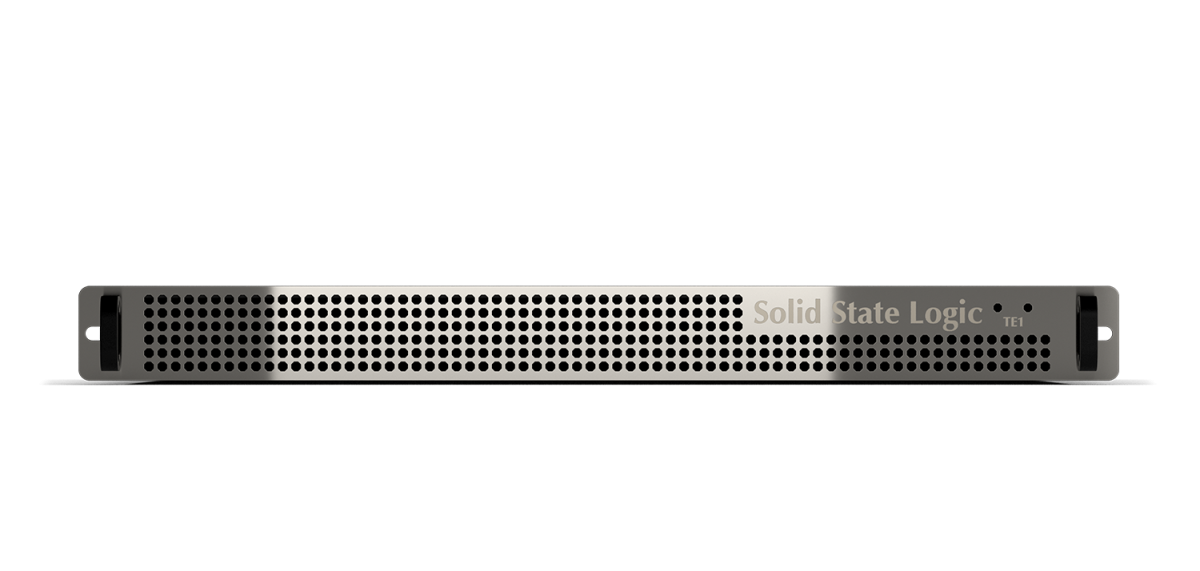
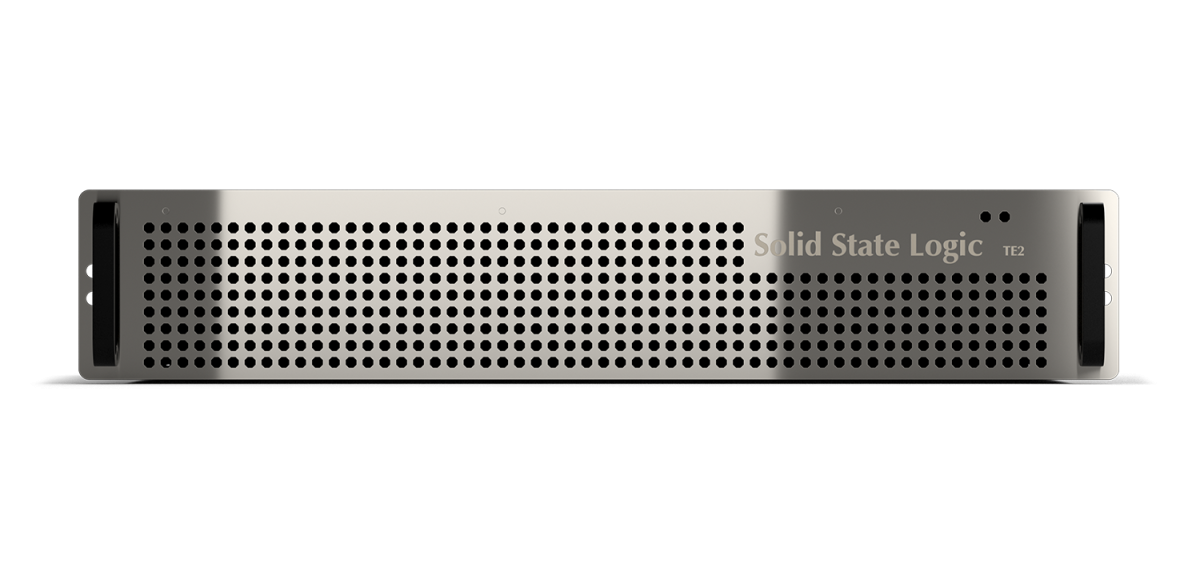
Tempest processor engines deploy SSL’s patented Optimal Core Processing (OCP) software using arrayed industrial PC hardware in a controlled operating environment. There are two different hardware engines available: TE2, offering up to 800 processing paths in a 2RU chassis, and TE1, offering up to 256 processing paths in a 1RU chassis. Paths and processing can be dynamically allocated in real time without interrupting audio.

With up to 2048 inputs and 2048 outputs per engine, System T can handle any large-scale production. Tempest Engines can be deployed as mirrored redundant pairs. Near-instant audio changeover happens via up to four Network I/O HC bridging cards, each providing 512 inputs and 512 outputs.

The System T Cloud VTE1 Virtual Tempest Engine provides up to 256 processing paths, supporting stereo, 5.1 and immersive formats, all controlled via hardware or software interfaces from any location. With a fully integrated Dante Connect implementation, the Virtual Tempest Engine offers 256 inputs and 256 outputs, with audio routing control managed directly from the UI and stored and recalled with the showfile. Across a distributed production architecture, any combination of hardware and software control interfaces can be utilised, offering a unified operator experience.

Solid State Logic’s fully native ST 2110 is designed to streamline modern IP workflows, the range simplifies connectivity with automated signal discovery and management, leveraging NMOS IS‑04 and IS‑05 for seamless integration. Users can take full advantage of ST 2110 infrastructures or run hybrid ST 2110/Dante environments with minimal hardware investment and without external converters, bringing up to 2048 native ST 2110 channels directly into the System T Tempest engine. This allows broadcasters to deploy the best technology for each part of their workflow and simplify operation and configuration.


Virtualised audio processing for cloud and on-premises

Solid State Logic is a leader in software-based processing for broadcast audio, delivering powerful, flexible workflows that operate seamlessly across on-premises, cloud and hybrid environments through the System T platform. At the core of this approach is a unified, software-defined architecture that enables consistent functionality, performance and control, regardless of where processing is deployed. Whether running on dedicated on‑premises infrastructure or within virtualised environments, System T provides advanced broadcast production capabilities without compromise.

For virtualised deployments, the VTE1 Virtual Tempest Engine delivers high-performance DSP processing from shared server hardware. In cloud-based workflows, System T extends these same capabilities into platforms such as AWS, enabling distributed and remote production at scale. From fully on-premises installations to cloud-native or hybrid workflows, System T empowers broadcasters to deploy, scale and manage audio processing wherever it makes the most sense, without changing tools, workflows or sound quality


 I/O & Interfaces

Interfaces and Stageboxes for SMPTE 2110, Dante and AES67 networks

SSL has over five decades of classic audio console design legacy, with many of the hardware and software control surface paradigms taken as standard today having first appeared on an SSL console. System T takes this DNA and creates a new broadcast specific set of control interfaces, that combine hardware panels with large tablet style multi-touch screens, in a fully networked environment.


Stageboxes

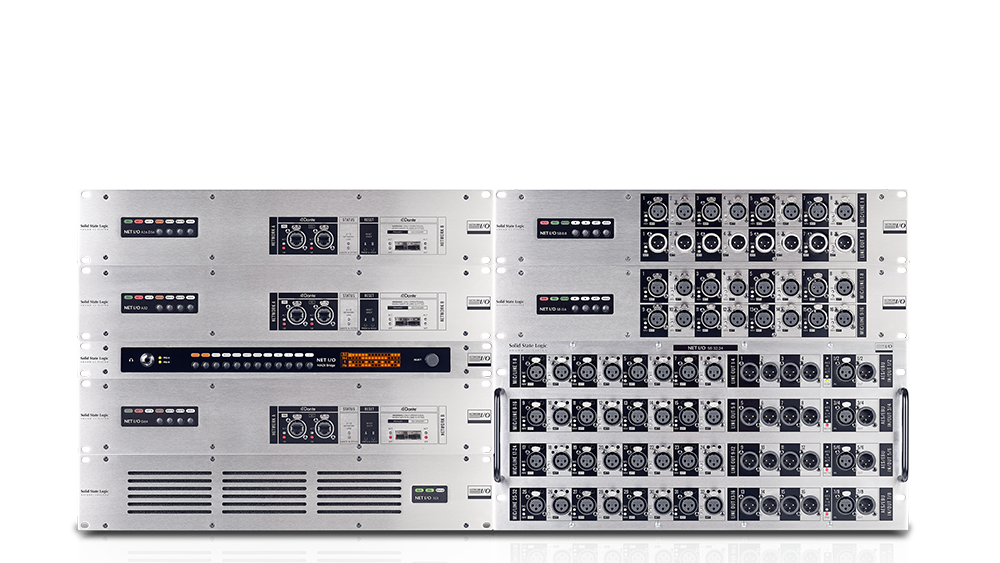
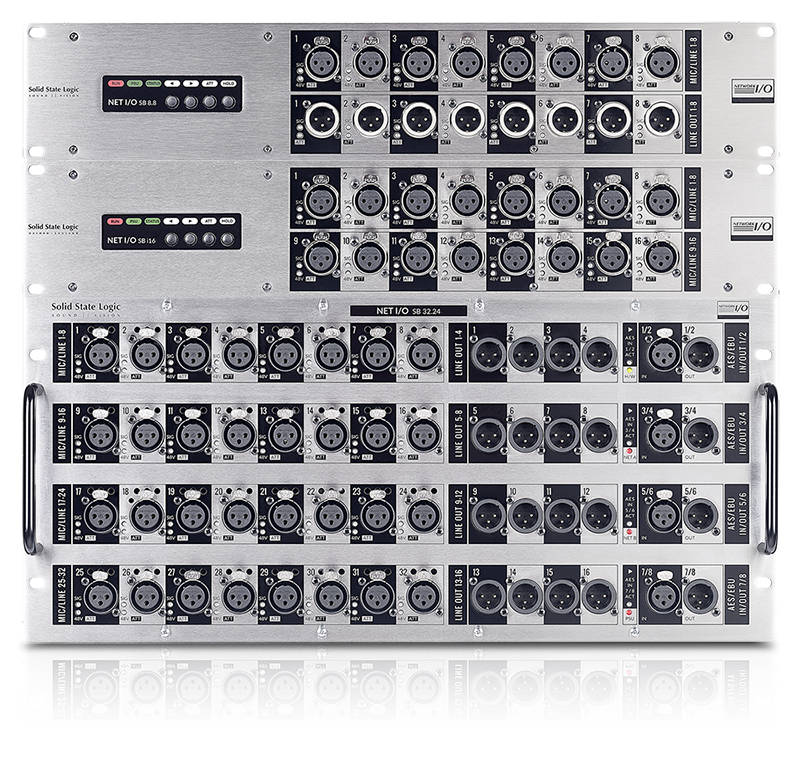
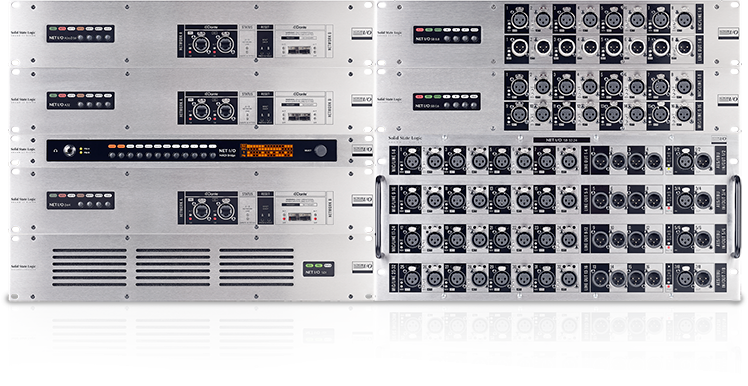
Designed for use on any Broadcast studio floor, venue or recording room, SSL Network I/O Stageboxes allow easy deployment of Mic Pres and Speaker feeds where needed. Network I/O’s plug and play features allow devices to easily be moved, even between locations and retain routing and settings if required. All units can be remote controlled via System T broadcast consoles and control interfaces, SSL Live consoles, and the SSL Network I/O Controller Application. There are four different models available; SB8.8, SB i16, SB 16.12 and SB32.24.

Mixed Format I/O

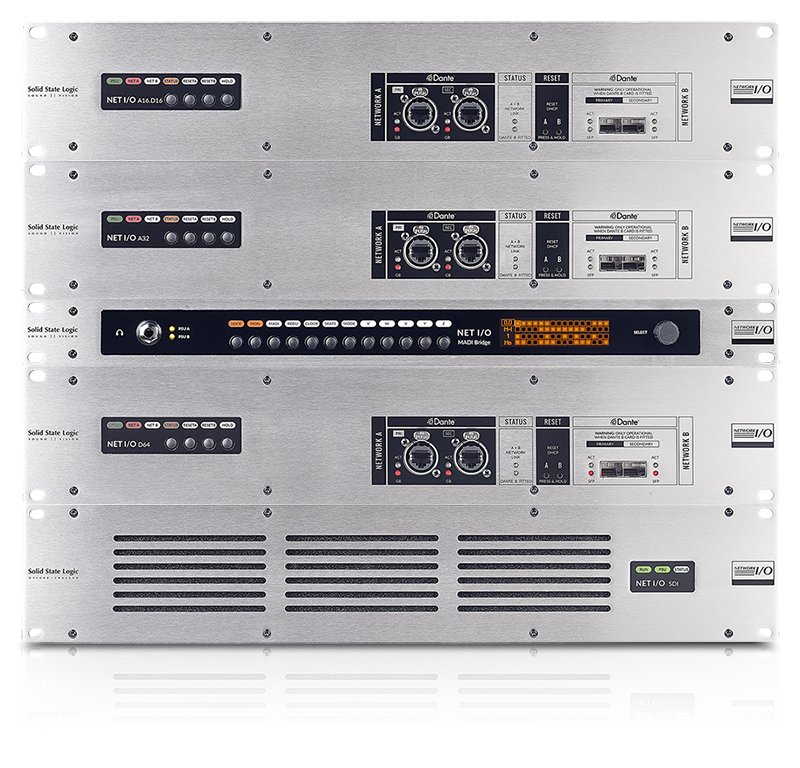
SSL Network I/O interfaces bring renowned SSL audio performance to Dante networks. They can be used as stand-alone solutions or used with System T to complete powerful facility wide systems. 13 different devices offer mic/line analogue, MADI, AES and SDI embed/de-embed capability wherever it is required. System T control interfaces, SSL Network I/O control software and Audinate's Dante Controller offer remote control of SSL mic/line I/O across the network.

ST 2110 Bridge

The Net I/O ST 2110 Bridge provides up to 512 channels of high-capacity conversion between ST 2110 and Dante in a compact 1RU chassis. With several flexible deployment options, the ST 2110 Bridge can be used to provide high channel count connectivity between ST 2110 and Dante networks whilst retaining the individual benefits both provide.


Net I/O HC Bridge

HC Bridge SRC provides 256 bi-directional channels of sample rate conversion for AoIP networks. HC Bridge SRC facilitates connecting audio between devices running at different sample rates or in different clock domains on Dante (48 kHz and 96 kHz), AES67 or ST 2110-30 networks. 


System T Features


SSL has nearly four decades of classic audio console design legacy with many of the hardware and software control surface paradigms taken as standard today having first appeared on an SSL console. System T takes this DNA and creates a new broadcast specific set of Control Interfaces that combine hardware panels with large tablet style multi-touch screens in a fully networked environment. Fixed format compact consoles and modular large format consoles can be combined with remotely located computers, or touch screen terminals and remote hardware panels. 

Up to three Control Interfaces can share a single processor engine simultaneously, facilitating for example, an entertainment production with one surface for a music mix and a second for a production mix using a single engine. Multiple engines can be connected to a single console VLAN and interfaces can be moved between engines. The various approaches to remote control capability enable true facility wide control infrastructure design.

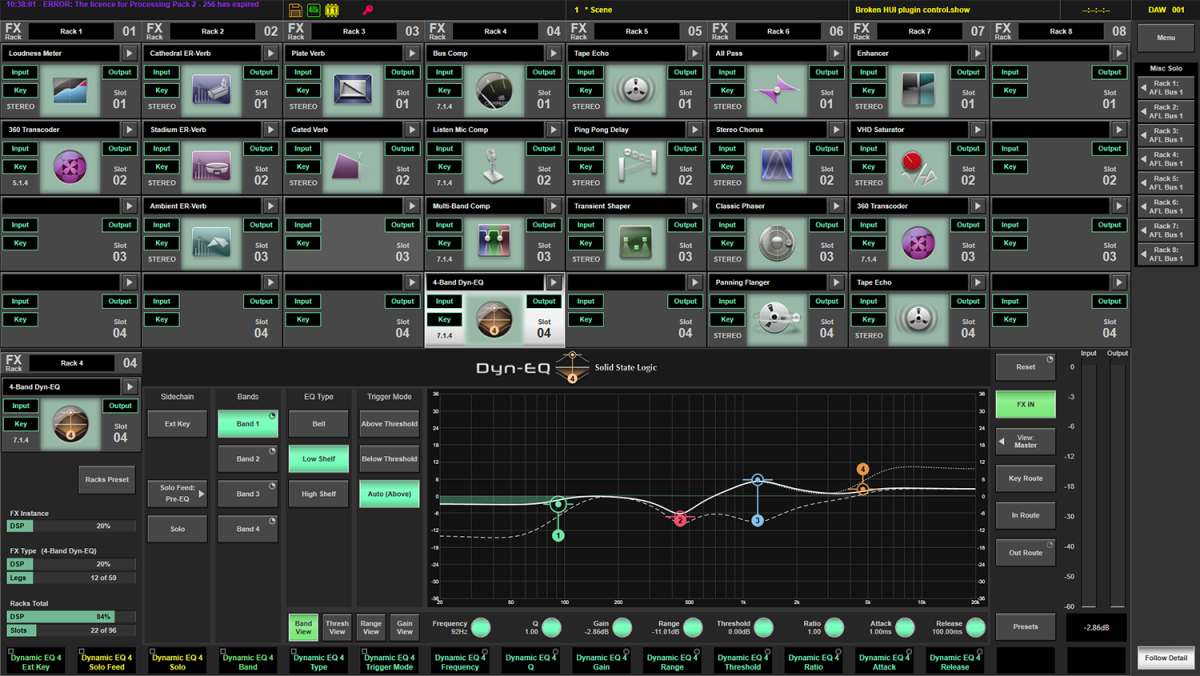
System T Effects Rack

System T features an extensive range of channel, bus, and Effect Rack processing tools. Many optimised for immersive music production. Every channel and bus features comprehensive SSL processing, including two dynamics sections, including gates, expanders, limiters, and compressors. High and low pass filters, with selectable slopes. Four band EQ with variable modes per band; including precise constant Q mode, legacy SSL channel strip mode, shelving and notch modes.

A set of over 60 additional effects and tools are available in the onboard SSL Effect Rack. With ultra-low latency and a dedicated DSP pool, these effects can be used on inserts or any other signal patch point. The selection includes the renowned SSL Bus Compressor, a multiband compressor, dynamic EQs, tape echo, modulation tools, reverbs, VHD saturation, a transient shaper and many more.

With System T V4.1, a range of FX are available from the FX Rack in the new 9.1.2, 9.1.4 and 9.1.6 formats. This includes delay, dynamics, EQ, modulation and more.

Immersive Audio

Object and Channel based immersive production for live-to-air broadcast

Staying on the cutting edge of content is important for broadcasters. Immersive audio has become a large factor in the production of top-tier live-to-air shows, becoming expected in prestigious sports and media & entertainment programming. The end user’s ability to consume immersive content has also increased thanks to binaural playback on mobile devices, the widespread use of soundbars in domestic environments and surround sound systems with height channels deployed in event spaces. This places a requirement on broadcasters to have the agility to produce content with immersive audio, often in parallel with day-to-day programming.

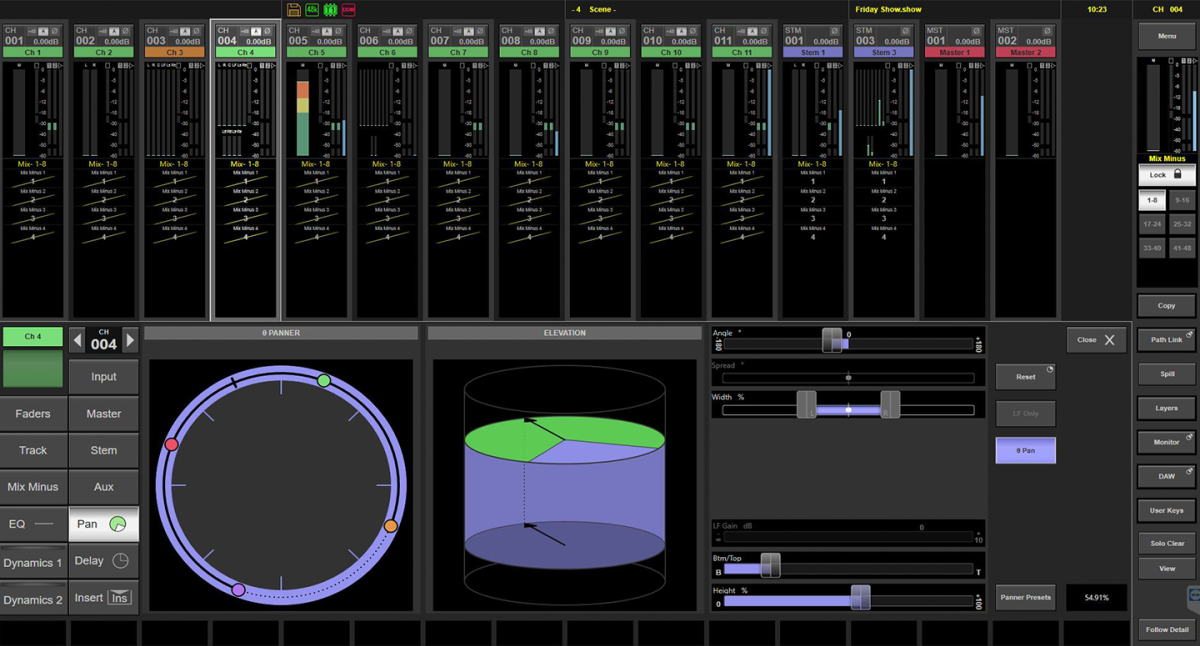
Theta Pan

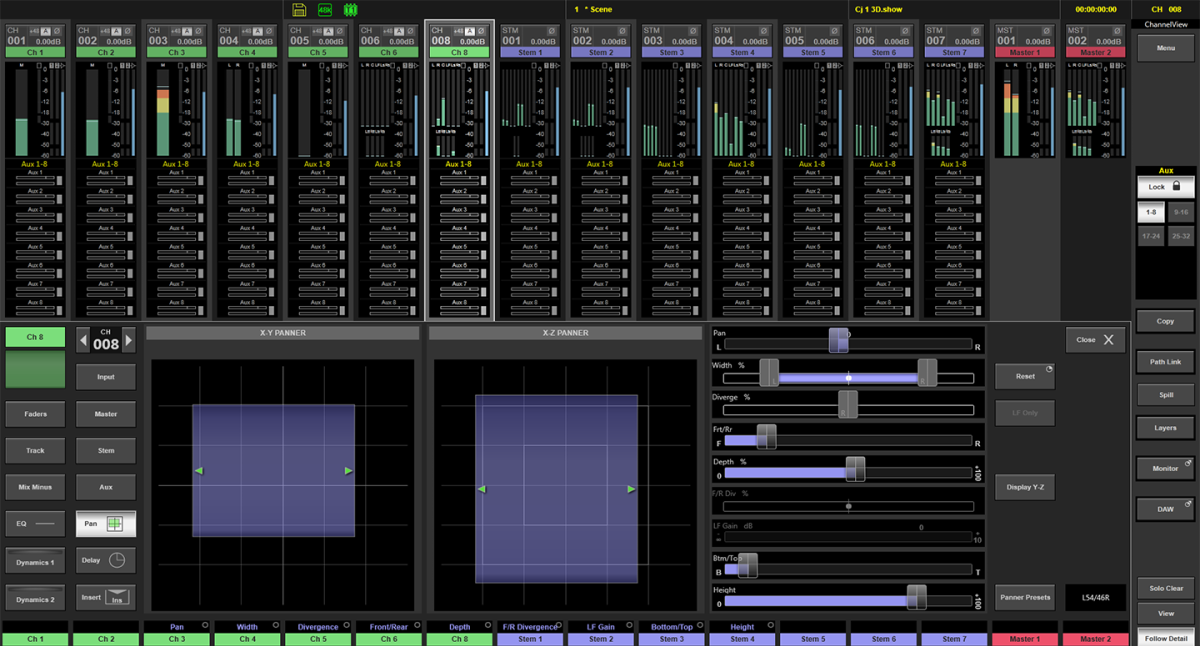
Channel View 3D Pan

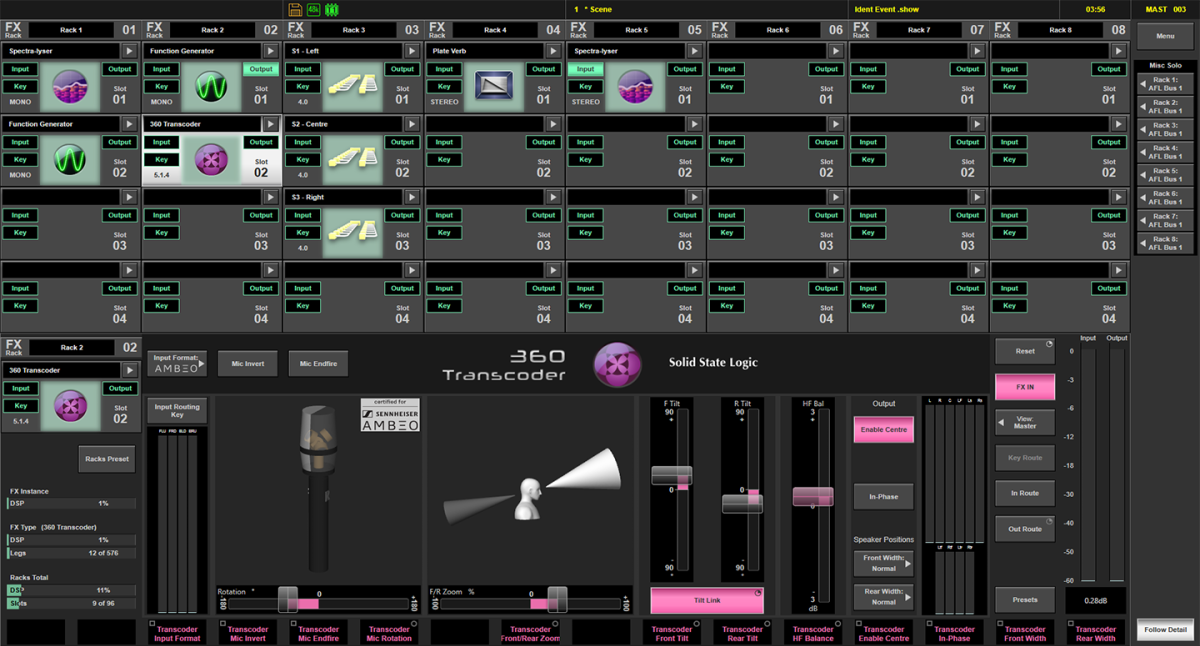
360 Transcoder

Open Sound Control

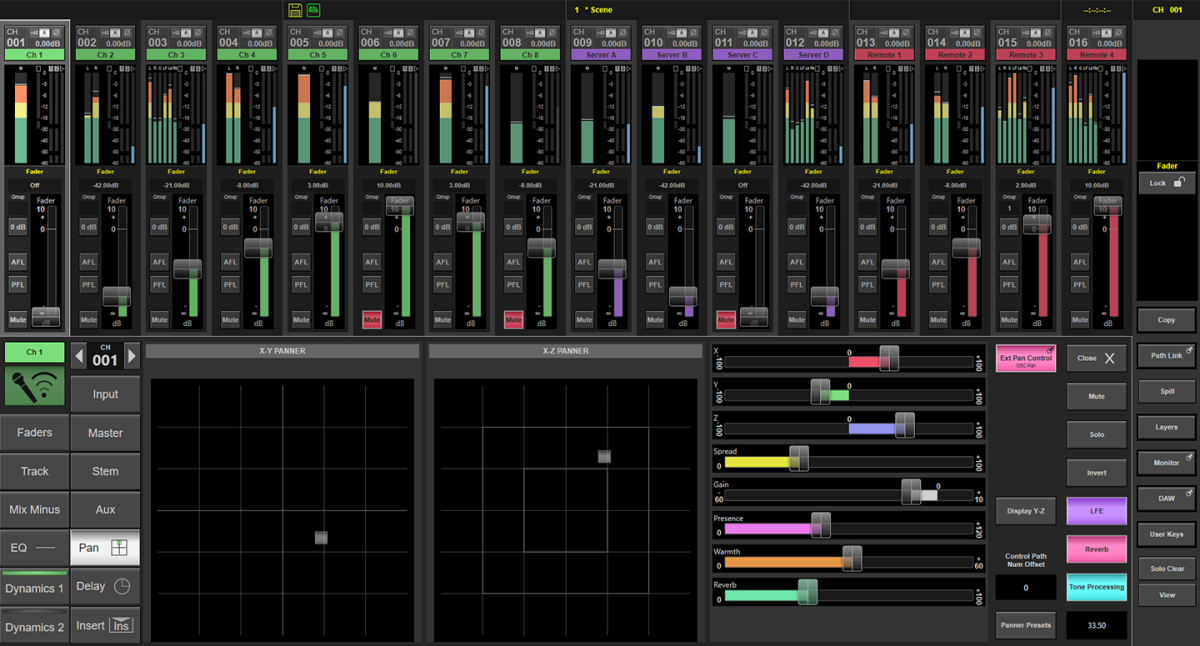
System T offers no-compromise immersive audio production, delivered through specifically designed workflows and feature sets, making it simple and efficient to produce Dolby Atmos and MPEG-H content. System T features both object and channel-based workflows with paths (Channels and Busses) available in formats up to 9.1.6. Market leading immersive panning options include XYZ, Theta and a variety of intelligent up/down-mixing functions when ‘phantom’ channels or fold-downs are required.

Dynamic Automation System

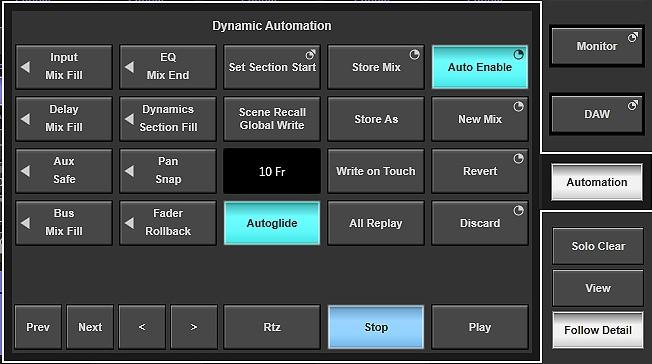
Dynamic automation has become a necessity for many major broadcast clients, for both live to air and complex television post production tasks. SSL has taken the history and heritage of its renowned Mix Automation developed for previous generation analogue and digital consoles, and updated this to match the flexible and mission-critical needs of a modern broadcast production environment.

Exceptional Audio quality and performance

SSL’s pristine SuperAnalogueTM foundations combine with 64-bit floating point processing and mixing to ensure unlimited audio headroom with the power to execute algorithms within a single sample. Broadcast specific path processing is augmented by an inbuilt comprehensive FX Rack.

Multi-gesture touch screen technology

System T’s multi-gesture touch screens provide intuitive crystal clear interfaces to the console’s extensive functionality. Carefully considered and well organised GUIs provide comprehensive, streamlined control of the entire console environment. Operational functions can all be controlled by a combination of gestural touch and hardware control via the Fader Tile Quick Encoders and the Channel Tile. Screen group assignment provides intelligent mapping of the Channel View to the screen where you are working.

Hands-on hardware

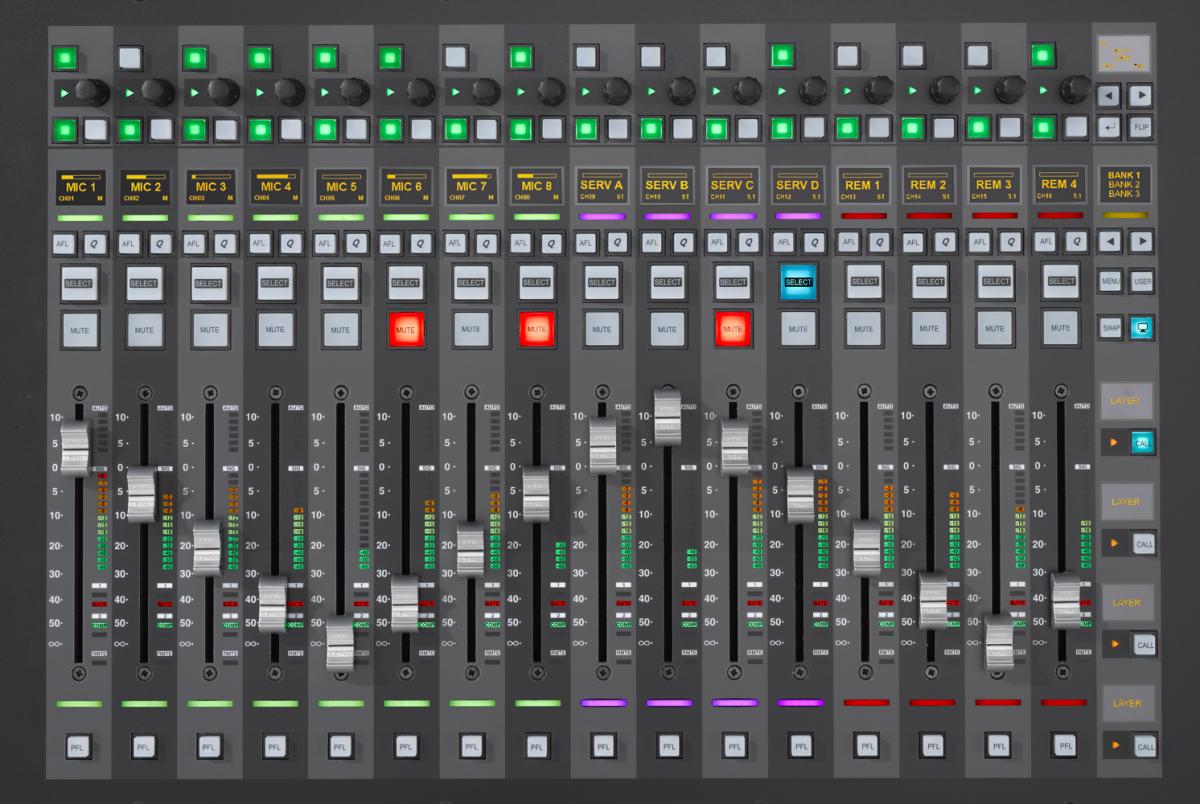
System T’s excellent screen interface combines with robust, responsive hardware. Each Fader Tile has fifteen layers with four banks per layer, giving rapid access to 960 paths via dedicated Layer & Bank buttons. Each fader strip has a 100mm motorised fader and a PFL Solo key plus back stop fader PFL. Additional keys include Mute, AFL, Select and a ‘Q’ key that accesses SSL’s unique Super Q system. Each strip features a set of Quick Controls (a push switch encoder and three assignable keys) that work in combination with vertically correspondent aspects of the screen interface above. Colour flag LEDS visually indicate selected functions.

Related Media