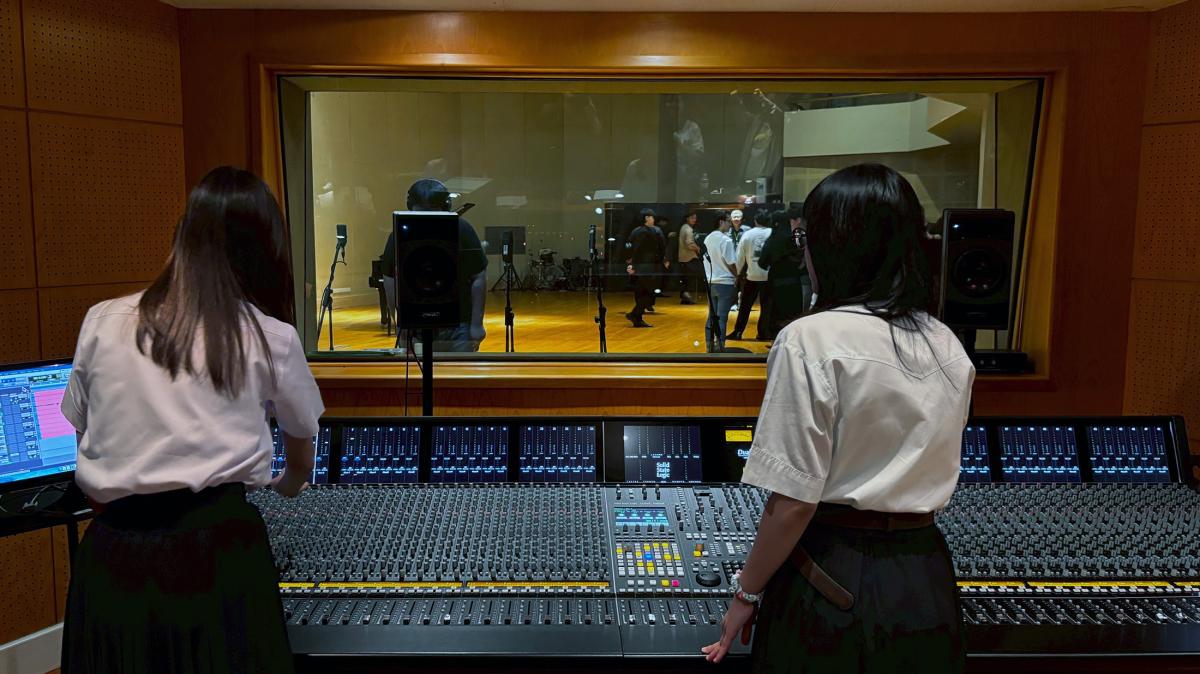
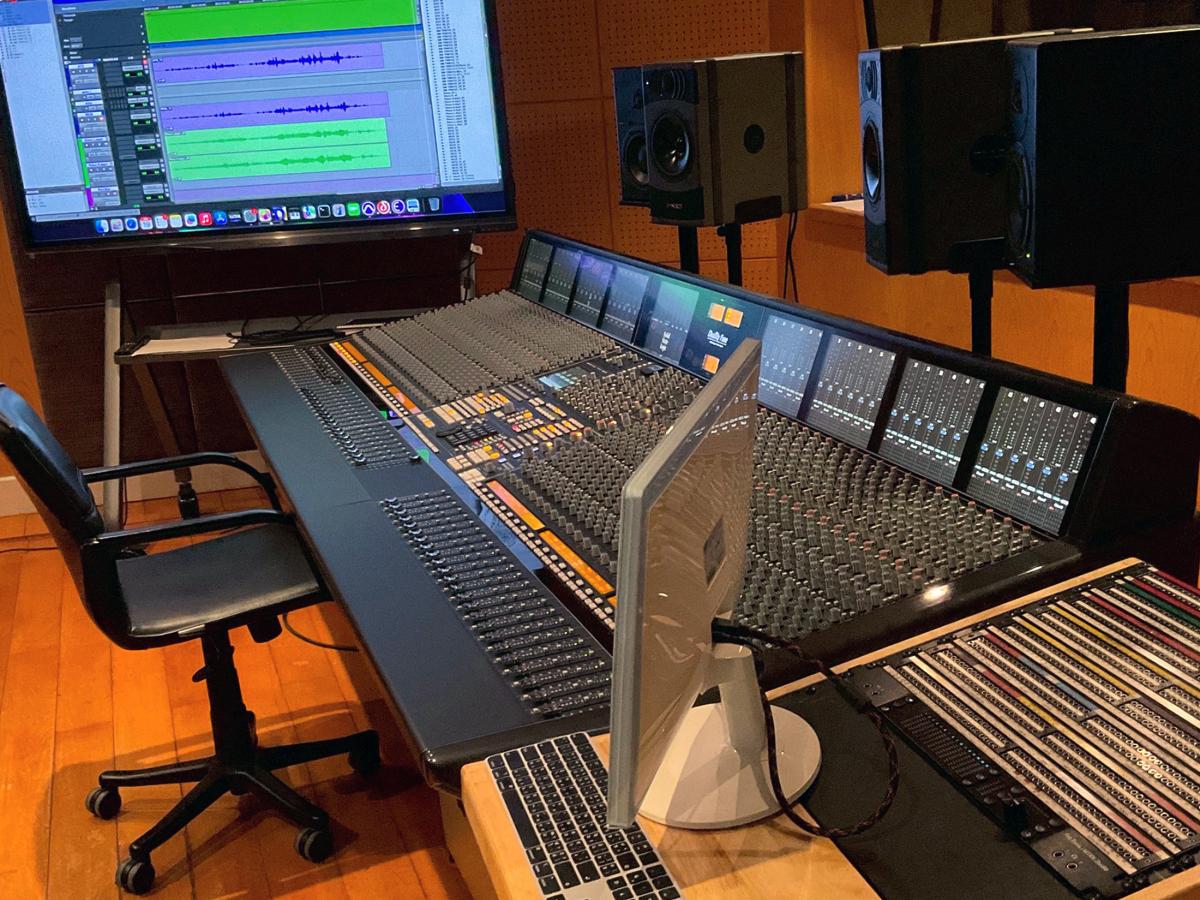
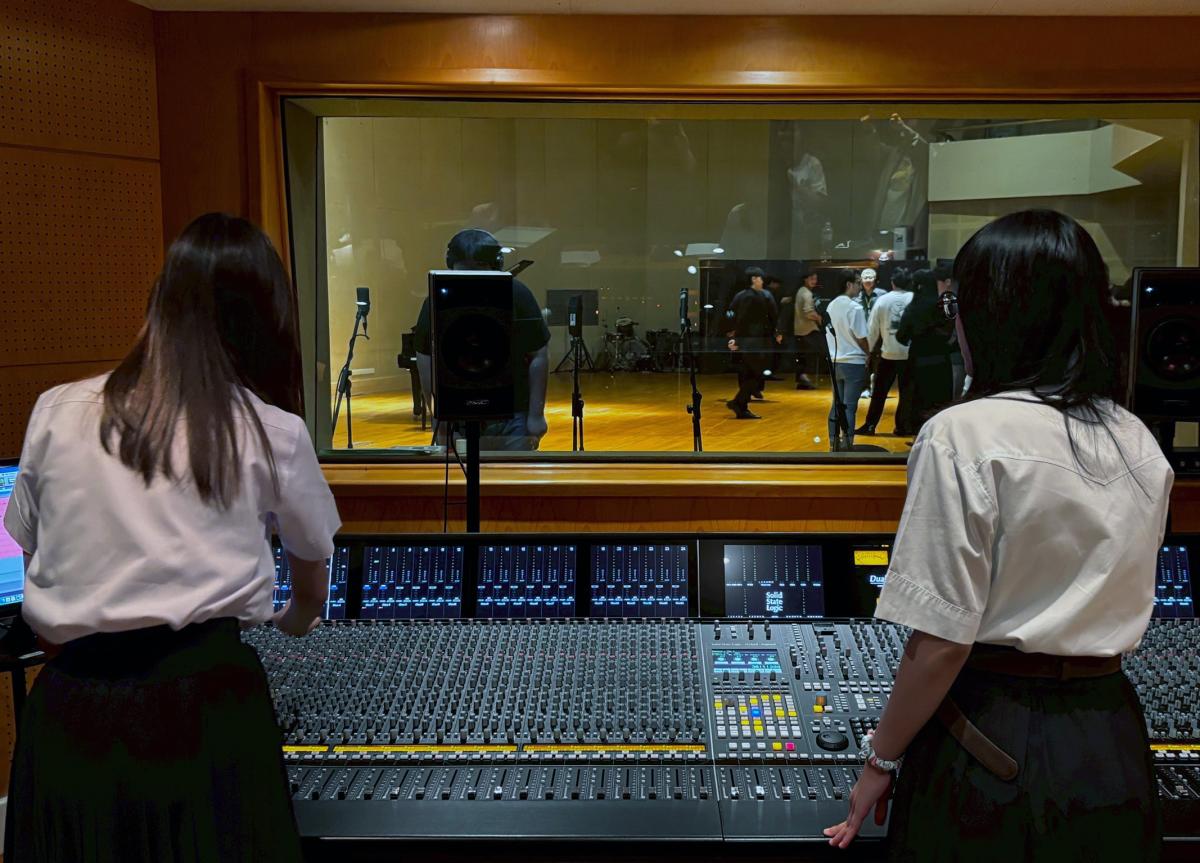
Nakhon Pathom, Thailand, March 17, 2026 - Thailand’s venerable Mahidol University has refurbished the principal recording studio at its College of Music, including installing a new Solid State Logic Duality Fuse SuperAnalogue™ 48-channel console - the first in the country. The Duality Fuse was supplied by Bangkok-based SSL distributor Vintage Studio, together with other pro audio equipment, for the refresh of the studio. The studio was designed by Mr. Chatri Ladalalitsakul, who was honoured as a 2019 National Artist of Thailand in the field of Applied Arts (Architecture).

“This isn't just an upgrade; it is the fulfillment of a decade-long vision to provide the very best for our students,” says Pongpat Chuapibul, Recording Engineer and Lecturer within the Music Technology Department at the College of Music. “This mixing console features an intuitive signal flow, making it an ideal learning platform. While easy to navigate, it remains fully equipped to handle complex routing and offers a comprehensive suite of advanced processing tools. It’s also regarded worldwide as the industry standard, large-format console.”

Duality Fuse: perfect for large sessions requiring hybrid workflow

Officially named the Phra Chenduriyang Studio, honoring the composer of Thailand’s national anthem, the facility is more usually referred to as Studio A or Studio 407, its room number. The educational studio is primarily dedicated to academic research, high-level music production training and faculty recording projects, accommodating a broad spectrum of musical styles, Chuapibul reports, from big band jazz and Thai traditional music to contemporary and classical productions.   

Faculty and students have been making the most of Duality Fuse’s integration with Studio 407’s DAW system. “After only four months with this console, the integration has been seamless,” Chuapibul shares. “In large sessions, I utilise a hybrid workflow. I route stereo groups as 'tape returns' for background elements like synths or choruses, while processing critical tracks — drums, bass and vocals — through the analogue layer. The ability to flip between DAW control and the analogue surface is incredibly efficient.” 


Regarding the automation, he continues, “SSL’s δ-Ctrl (delta control) Plug-in is a game-changer. It is clearly designed to simplify the workflow and succeed legacy automation by offering modern convenience, precision and total integration with a DAW.” Having said that, he adds, “I still have a deep appreciation for the Legacy Automation. There is a tactile, 'classic' feel to it that I find very natural for my creative process. Having both options available on the Duality Fuse makes the console incredibly versatile for any production style.”

Dual Variable Harmonic Drive / SuperAnalogueTM Mic Pre’s

Chuapibul has enjoyed familiarising himself with Duality Fuse’s features and capabilities. “The dual mic pre, with 2nd and 3rd order Variable Harmonic Drive sounds incredible on everything. The flip-able SuperAnalogueTM pre is a fantastic ‘reference’, but to be honest, I can't find a single reason not to try it on every channel. It’s one of those features that simply does no harm. The Variable Harmonic Drive is so effective that I find myself using it on nearly everything.”   

The EQ performs exactly as it should, he also observes. “What I’ve found is that for general tone shaping, you can keep everything centered, and with just a single boost or cut you get the desired sound effortlessly without touching anything else. However, when you need to switch to problem-solving mode, it is equally capable of delivering clinical and high-precision results. The default E-curve works so well on everything that I haven't had a reason to switch to the G-series yet. I’m very satisfied with the results I’m getting, but I look forward to experimenting with the different curves as I get deeper into the console.” 

As for the Comp, Gate and summing busses, he continues, “They are so good that they made our lecturers feel a bit sad about all the money we’ve invested in plug-ins over the years. Once you hear the real thing, it’s hard to justify going back to a digital emulation.” Indeed, Chuapibul has also been using the console’s on-board Fusion processing to shape and color his sources while tracking and mixing. “My favourite section by far is the Vintage Drive. I find it incredibly effective for adding 'weight' and 'harmonic cohesion' to a mix.”

The console that came along and cleared everything up

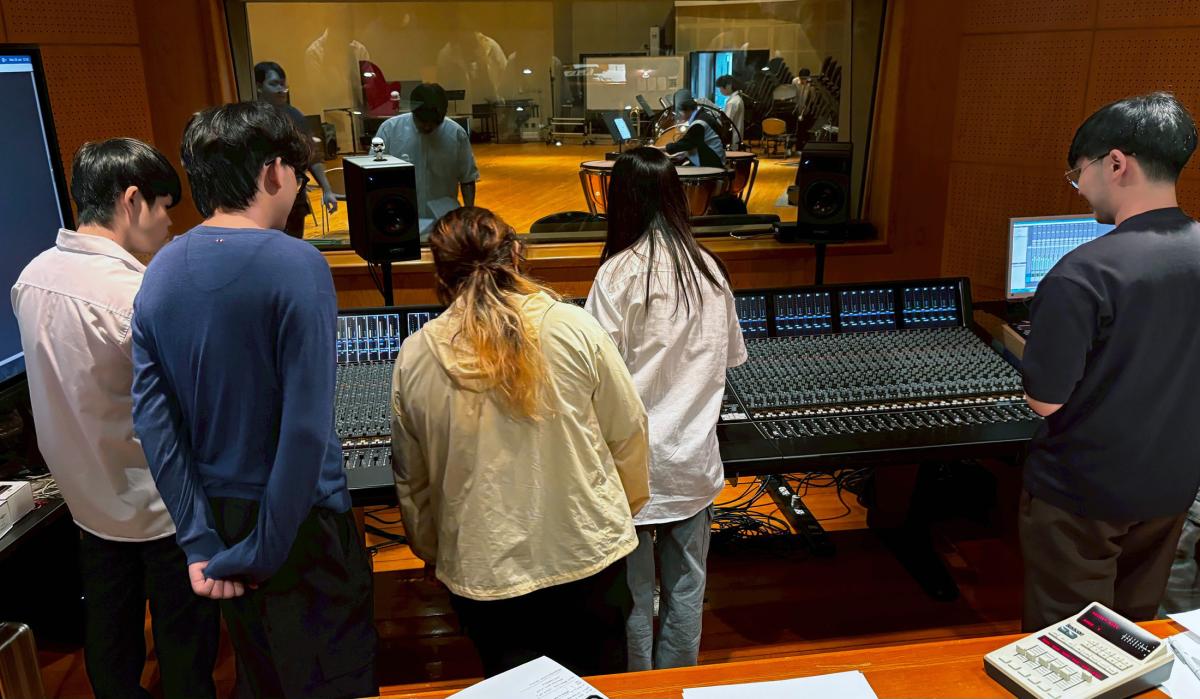
When Chuapibul and the faculty first heard the Duality Fuse in operation in Studio 407 it was quite a revelation. “It felt like we had been driving with a filthy windshield for a decade,” he recalls. “Then, this console came along and cleared everything up, revealing a level of detail we never knew we were missing. Ten years ago, when I first began the journey to find a console to replace our original one, I reached out to SSL via their website to express our serious interest. Today, seeing the Duality Fuse finally standing in our studio, and witnessing the joy of my students and fellow faculty members as they work on it, I can say with certainty that it was worth every second of the ten-year wait. Having the Duality Fuse feels like finally having the right tool for the right job. It makes the entire production process feel like a breeze, while teaching students techniques and methods which actually matter in a professional studio environment.”

Established in 1994 by Mahidol University under the leadership of Associate Professor Dr. Sugree Charoensook, the College of Music, in the western suburbs of Bangkok, was the first music school established in Thailand.  The Music Technology Department at the College of Music, Mahidol University, is committed to providing students with the most advanced and effective tools in the industry, Chuapibul says. “We believe that learning on world-class, industry-standard equipment creates an invaluable experience and memories that stay with our students throughout their professional lives—an opportunity that is rare to find elsewhere.”