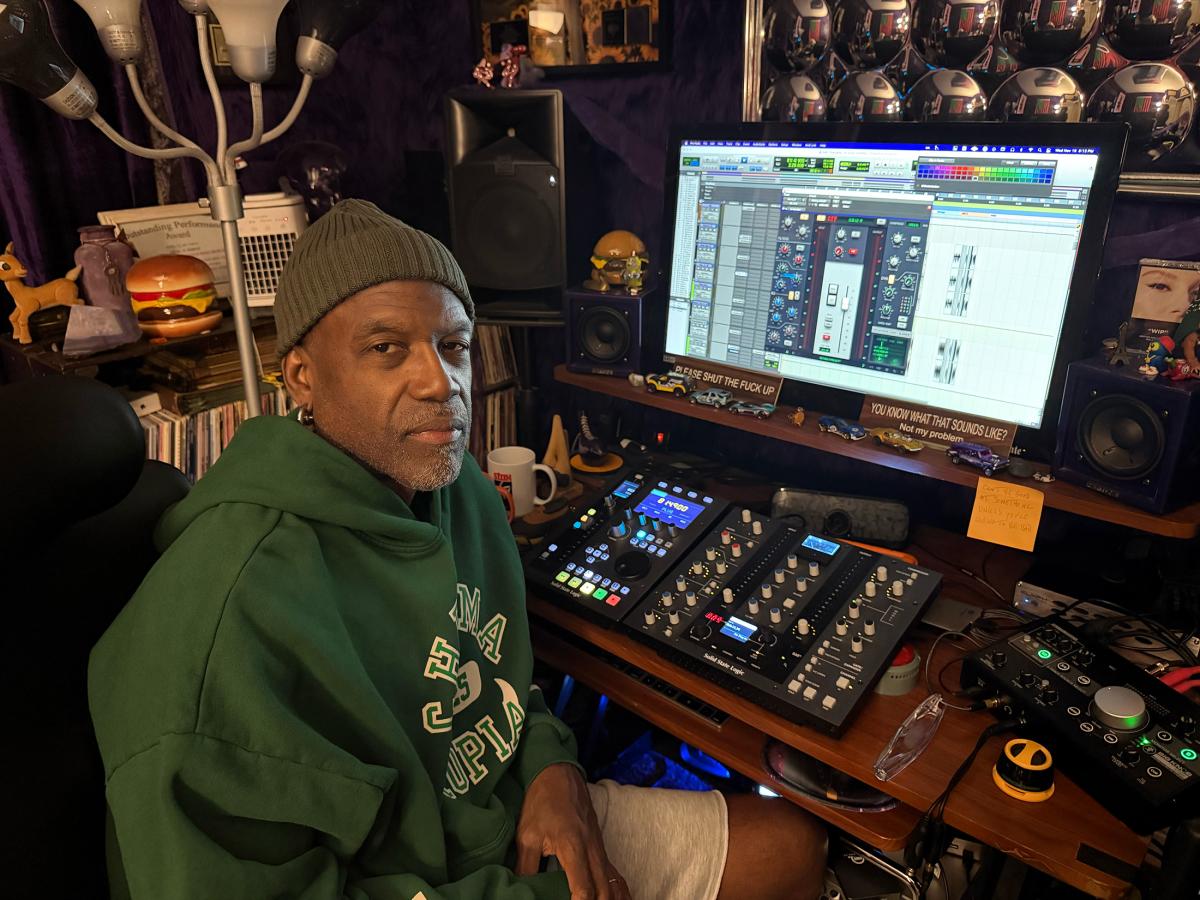
Los Angeles, California, December 22, 2025 — Mixer, engineer and producer Neal Pogue has used Solid State Logic analogue mixing consoles for his entire career, winning seven Grammy Awards and racking up Gold- and Platinum-certified records in the process. Now, with the adoption of hybrid production workflows and maximising the potential of ITB mixing, Pogue has installed SSL’s U Series DAW controllers at his home studio in the Los Angeles area, where he mixed two of this year’s biggest albums, by Tyler, the Creator and Doja Cat.

“I'm exclusively an SSL guy and have been from the beginning,” Pogue confirms. His first full-time position was at Larrabee Studios in Los Angeles — one of the first SSL facilities in the U.S. — followed by a long tenure in Atlanta at Soundscape Studios, which later became Bobby Brown’s Bosstown, then Outkast’s Stankonia Studios, which featured an SSL SL 4000 G. The facility recently installed a Duality Fuse console. He won his first Grammy in 2004 for Outkast’s The Speakerboxx/Love Below album and hasn’t looked back, picking up further Grammys with Tyler, the Creator, Kaytranada, Steve Lacy and Victoria Monét, working at SSL-equipped rooms around the country.

Mixing In-The-Box on with SSL U Series controllers

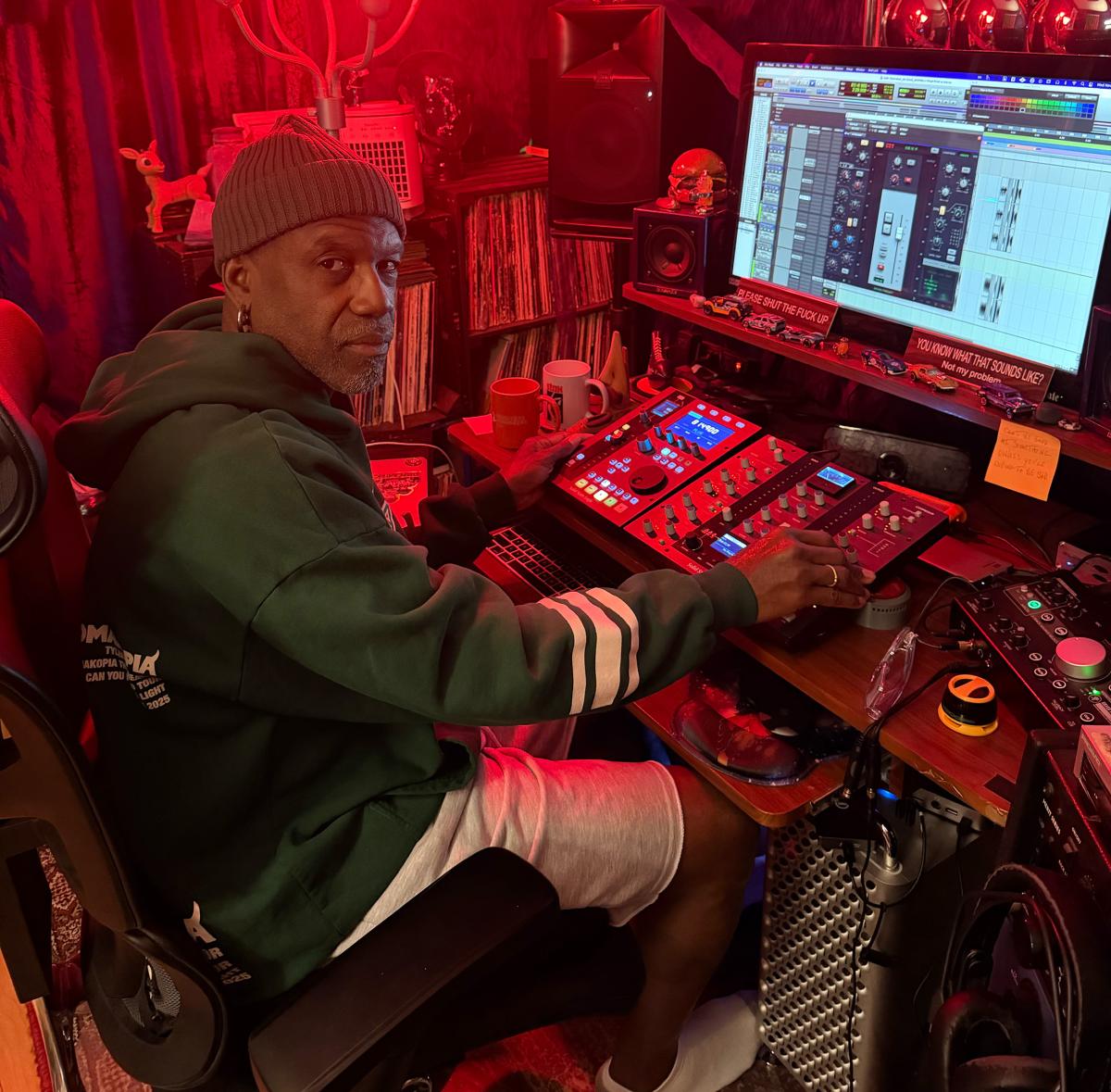
“Tyler was one of my only clients that I would go into the studio with, because we love the big SSL board sound. But his last two albums, Chromakopia and Don't Tap the Glass, were mixed entirely at my place in the box. Having SSL’s UC1 and UF8 was wonderful, because I could still touch something, rather than just looking at a screen and using a mouse.”

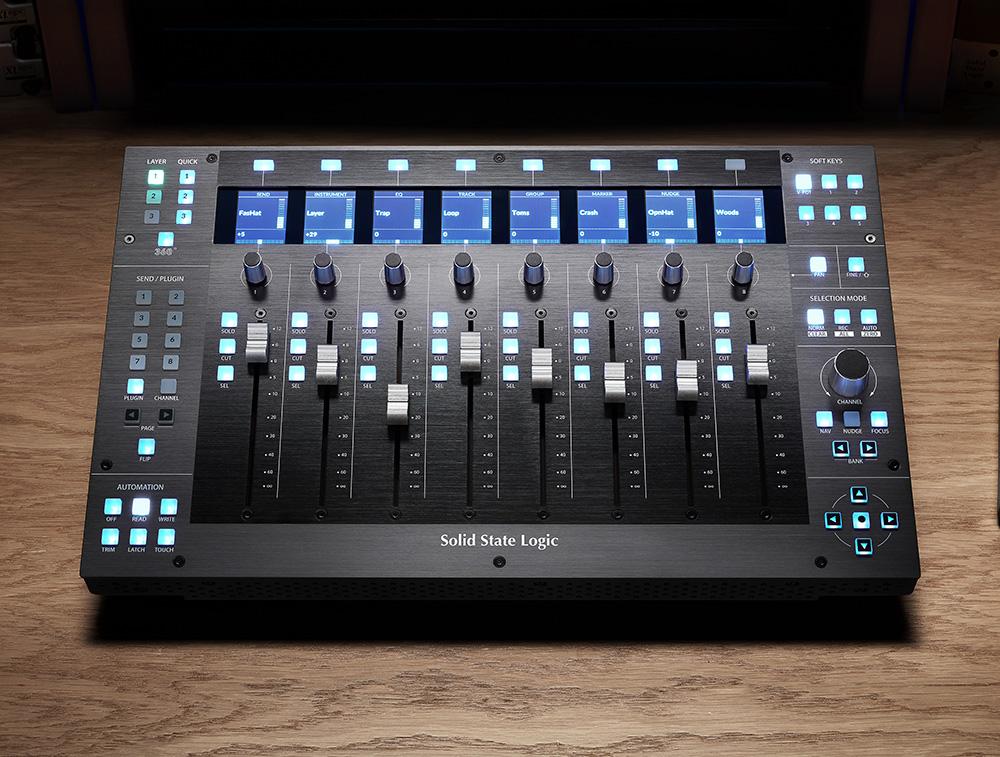
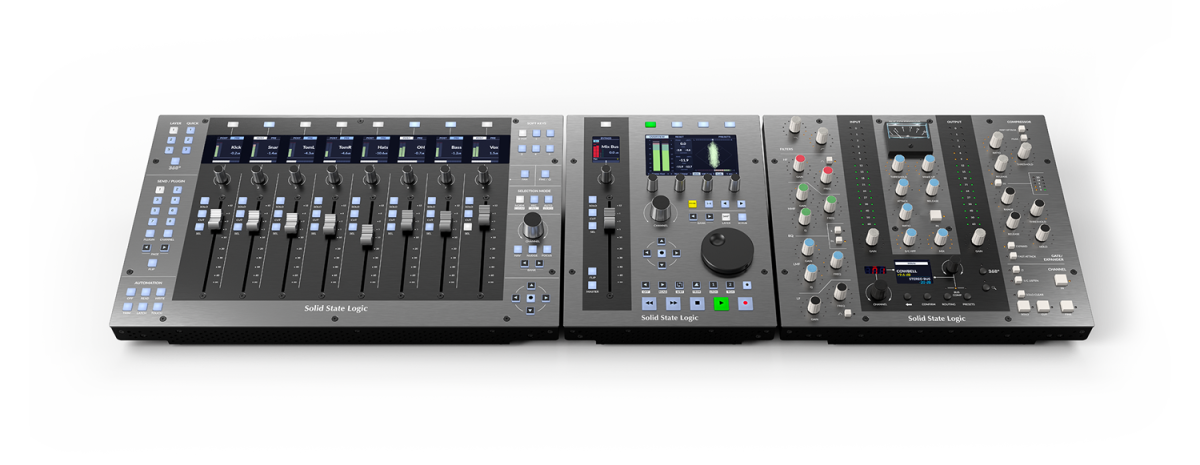
The UC1 plug‑in controller features dedicated knob‑per‑function controls for EQ and Dynamics, and includes full Bus Compressor controls in the centre section. In addition to seamlessly integrated channel strip, EQ, and compressor plug‑ins, with 360 Link and 360 Bus Compressor Link plug‑ins, users can map any third‑party plug‑in to the controllers. The UF8 eight‑channel advanced DAW controller houses eight premium‑quality 100 mm touch‑sensitive faders, together with assignable keys and rotary encoders. “Having those controllers keeps my brain in the analogue world,” he says, “I like to physically interact with the EQs and faders, and dial in the compression. It sparks inspiration in a completely different way. They bring the creative juices out of me.”


Using a single channel of EQ controls is not always as fast as having dozens of EQs spread across a large-format console. “But I don't worry about speed, because I come from the analogue world, and it was never about speed for me — it was about quality. Everything in the digital world moves at a lightning pace, which in turn created impatience in the record biz. Working on the SSL U series controllers keeps my patience intact,” he chuckles.

Setting up the virtual SSL console

Pogue makes full use of the SSL plug-ins with his U Series controllers, setting everything up to provide an analogue mixing console experience. Before he even starts a session, he says, “I always put the 4K G Plug-in on all my tracks as a starting point. Then, when I open up the 360 Plug-In mixer, it makes me feel like I have a virtual SSL console in the DAW. Having the SSL plug-ins is great. I like the FlexVerb, the various compressors, DrumStrip and GuitarStrip plug-ins - I love them all. Plus, of course, the controllers take them to the next level.”

If the 4K G Plug-in is not right for the source track that he’s working on, he continues, “I’ll just use a different SSL channel strip instead. The foundation of the music, of a vocal or a musical instrument, is all about the channel strip, and I know what I want, because I know how they each sound. I’ve worked on the B Series, E Series, G Series, G Plus, the J and the K Series, as well as Duality. I've pretty much used them all since the beginning, and I know how different they all sound, and I know how the compressors and EQ react differently across the different consoles. I'm a little older than many of the guys that are around, and some of the new guys don't know about the different EQ and compressor flavours. So it's good to have that knowledge about each series.”

Accessing his favourite compressors, EQs and filters

With his controller setup, he says, “SSL channel strips have the compressor, EQ and filters that I love. The first thing I always reach for is the SSL channel compressor; they sound great across pretty much any source. If that doesn't work for me - because I'm looking for something else, for a different character — I'll try something else, like the SSL Bus Compressor. But when it comes to the SSL channel strip, it's all there for you.”

Tyler, the Creator’s Don't Tap the Glass made its debut at #1 on the Billboard 200 when it was released in July 2025, and its predecessor, Chromakopia, released in October 2024, also debuted atop the Billboard 200. “I think Tyler is one of the biggest creative minds in the business, and he makes it fun, too, which makes it a little easier. Because mixing is supposed to be fun; it's not supposed to be work,” Pogue says. He also mixed most of the new Doja Cat album, Vie. Released in September 2025, it debuted at #4 on the Billboard 200 chart.

Pogue, who focuses primarily on hip-hop, R&B, pop and jazz, has also worked as a producer with Earth, Wind & Fire, M.I.A. and Nelly Furtado. He has also mixed projects by the likes of Janelle Monáe, Nicki Minaj, Pink and TLC, including engineering and mixing TLC's 11-time platinum single "Waterfalls."

Working with SSL controllers and software is a natural progression from Pogue’s former reliance on SSL’s large format consoles, which typically provided much of the processing he needed on a session. “I don't use any hardware anymore; I'm just a SSL U series controller and plug-in guy. But I'm a less-is-more guy. Even when I worked in a studio, I never had towers of hardware gear, just the right gear. But now, the controllers are right there in front of me, and I can't live without them.”