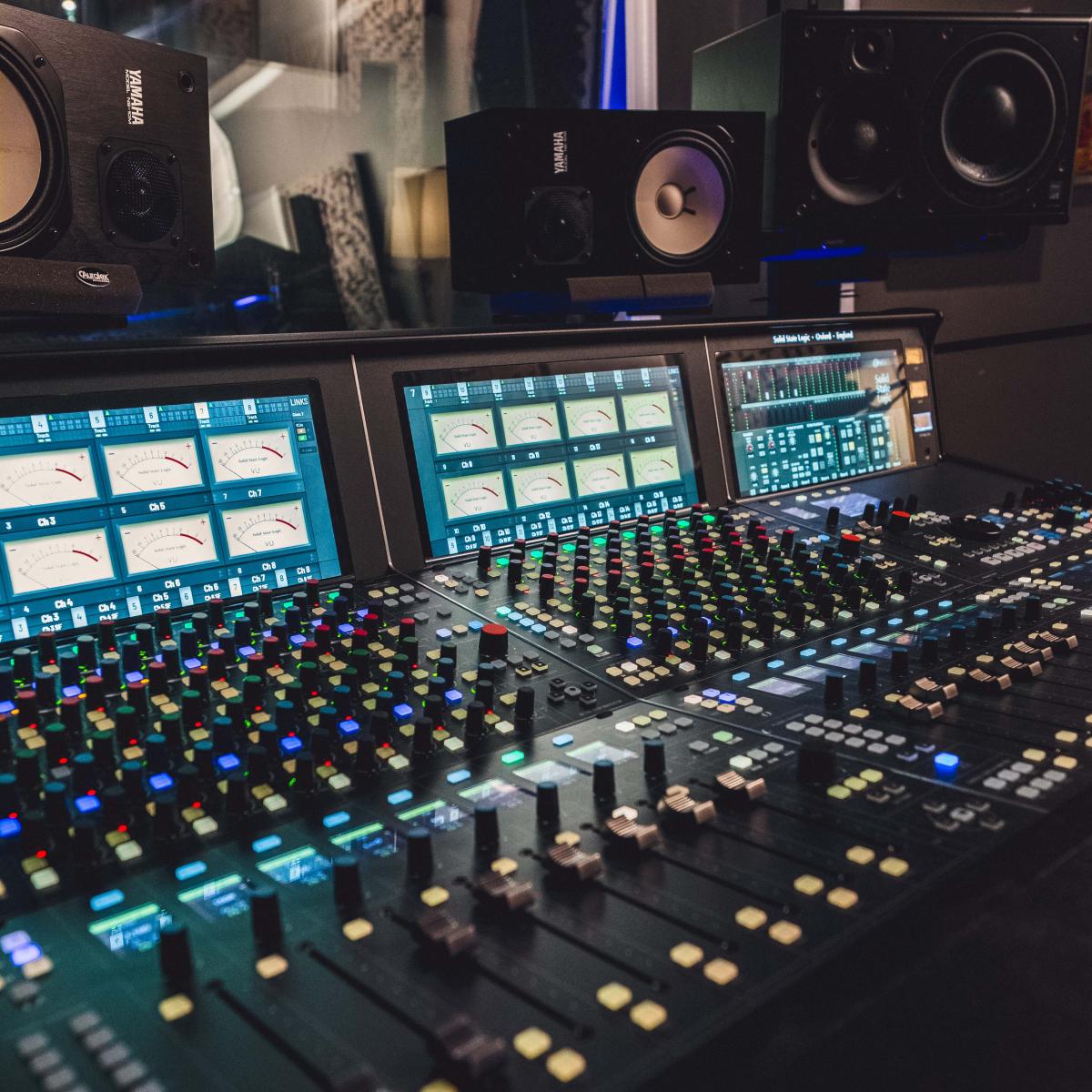
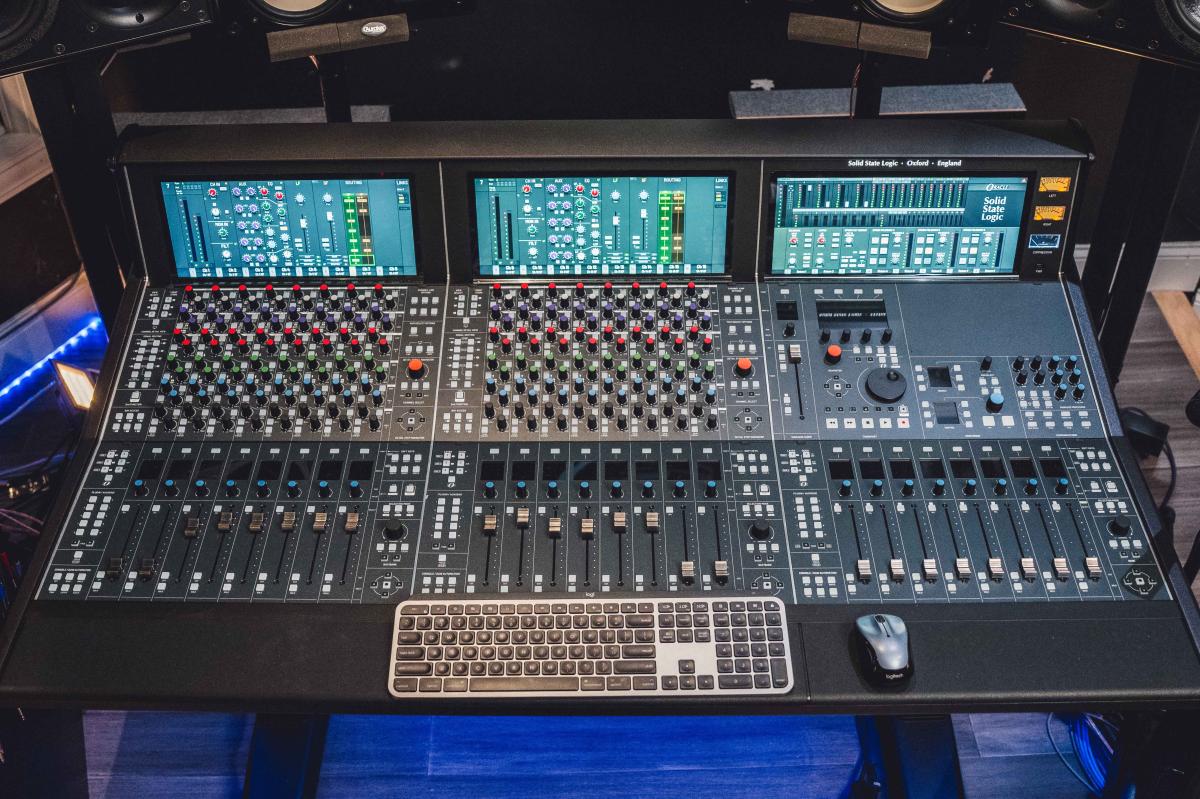
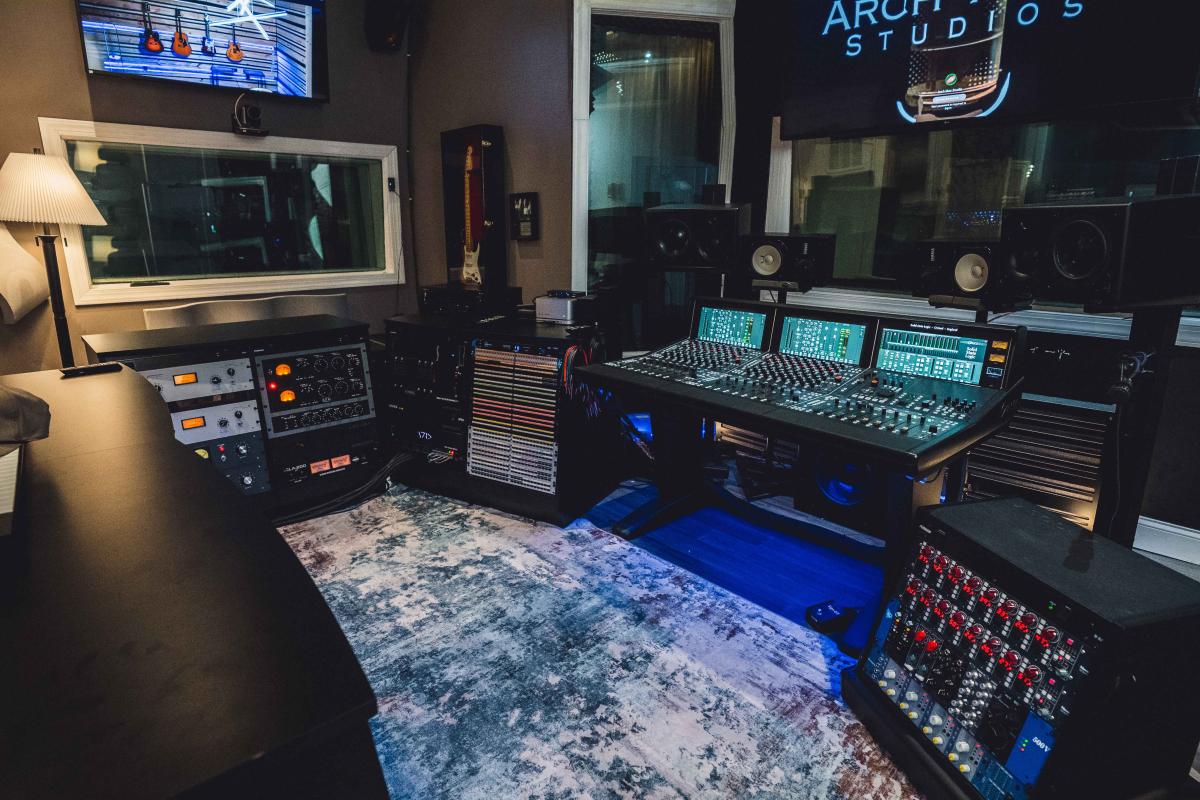
Another feature of the Oracle that he appreciates, he continues, is being able to bring the channels that he needs to work on to the motorised faders in front of him without ever leaving the sweet spot between the monitors. Each of the two 8-channel bays can be switched to control a different bank of inputs, and they don’t have to be contiguous. “Having that flexibility, I could have the drums on channels one through eight, for instance, and on the second fader bank have, say, channels 25 to 32. There are two completely separate sets of banks of faders. DAW control could even be assigned to one of them, if I want ITB control on one side, and full analogue control on the other; that's very powerful,” Hutchinson says.
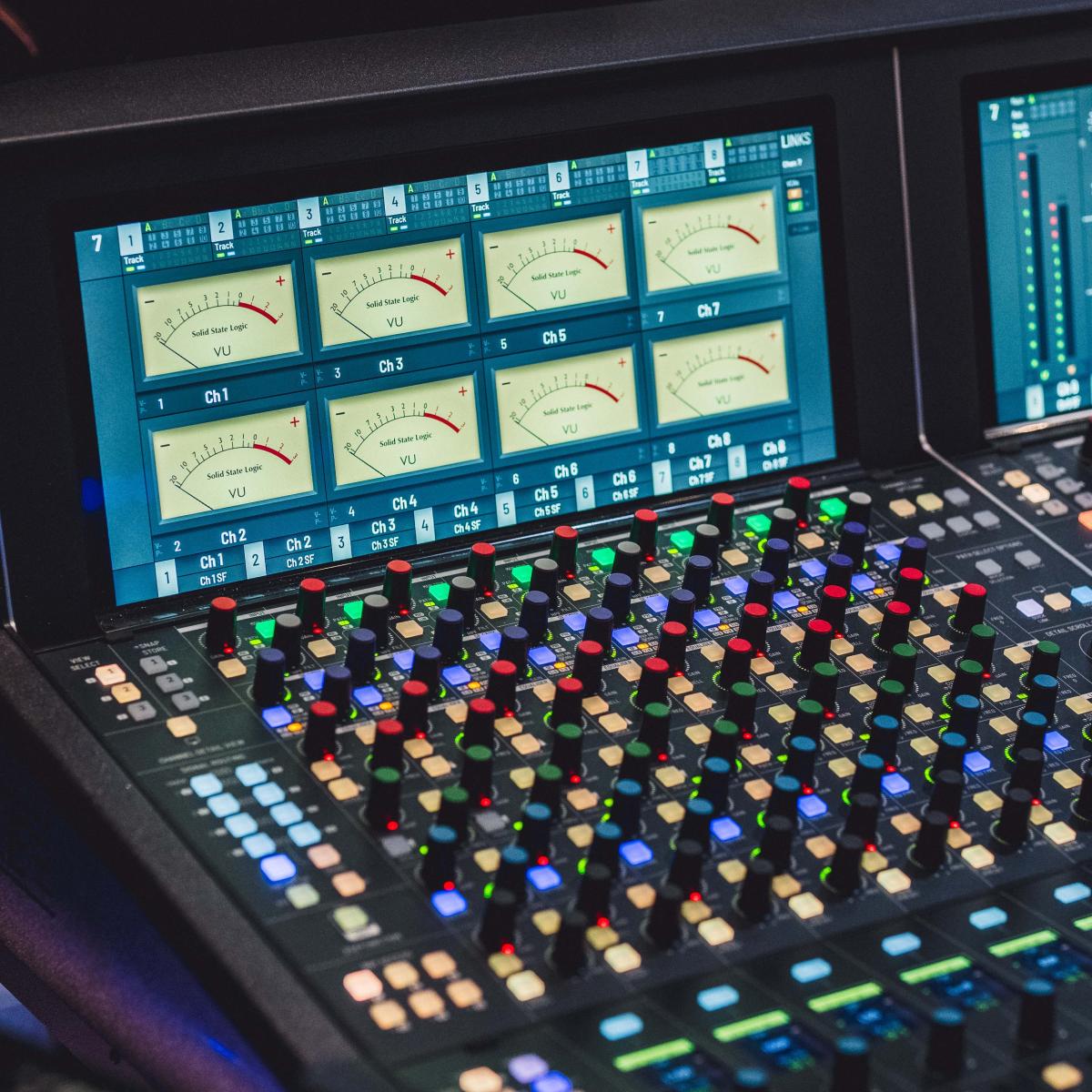
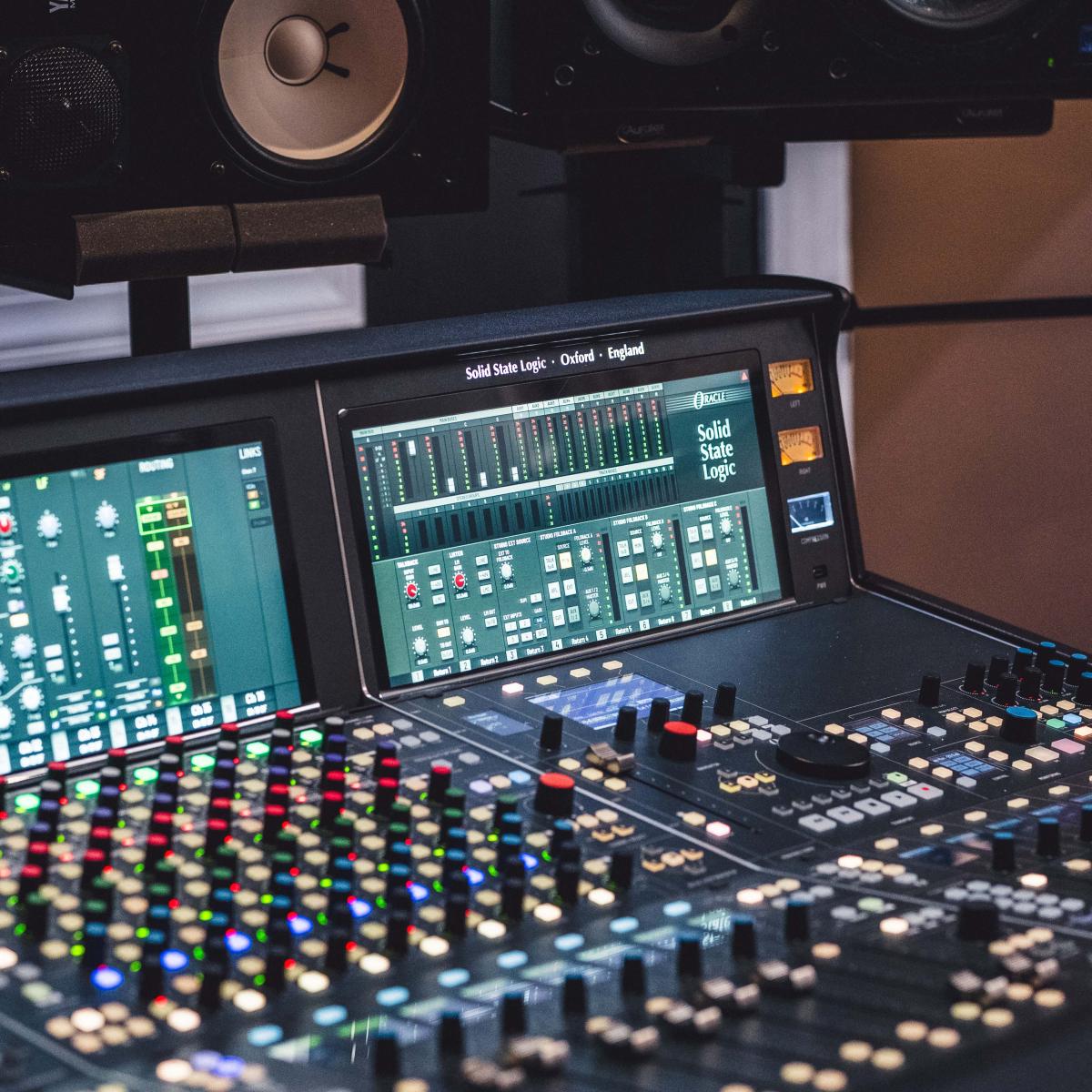
As for keeping track of what sources are coming through which channels, the labels entered by the engineer show up both at the fader and on the high-resolution meter bridge screens, which can display plasma-style bargraph or classic analogue-style VU meters — or any number of other features, such as EQ, processing, routing, or other expanded surface controls. “You never have to wonder; you know what fader you're touching, because it's named right there in two places. It keeps you from making mistakes.” Routing and Channel names may either be entered during console setup or beforehand, using the O-Control App, an offline tool for session preparation and console configuration. “I prefer the plasma-style meters more so than the VU meters,” he adds. “They're just more vibrant, and they show you the levels at both the small fader and the large fader simultaneously.”
Like other SSL music production consoles, Oracle supports today’s hybrid workflows through its ability to operate as a conventional in-line analogue mixing desk or as a DAW controller, independently on each 8-channel bay. “Switching back and forth between the DAW and the console is very easy,” Hutchinson says. “It's literally the touch of one button and you're pushing the Pro Tools faders. Hit it again, and now you're controlling the console.”
Hutchinson jumped in at the deep end for his first project on the Oracle by hosting a tracking date with a full band and vocalists, but the sessions could not have gone more smoothly, he reports. “We committed to a lot on the way in, Oracle’s routing, processing, and inserts, sending from the small fader or large fader path and back again, was just seamless. The console is very easy to understand and very easy to operate.”
With this inaugural session behind him, Hutchinson is looking forward to fully exploring some of the mixing features of the Oracle, including the integrated Dynamic EQ processing, THE BUS+ stereo compressor and SSL’s automation. There is a lot packed into a relatively compact surface, he says. “A 48-channel console, especially one with up to 112 inputs at mixdown, is normally 10 or 12 feet long. So, to be able to have the insight to put all the analogue components in a remote rack and make the footprint of the console smaller is just brilliant.”