Live Sound
11/02/26

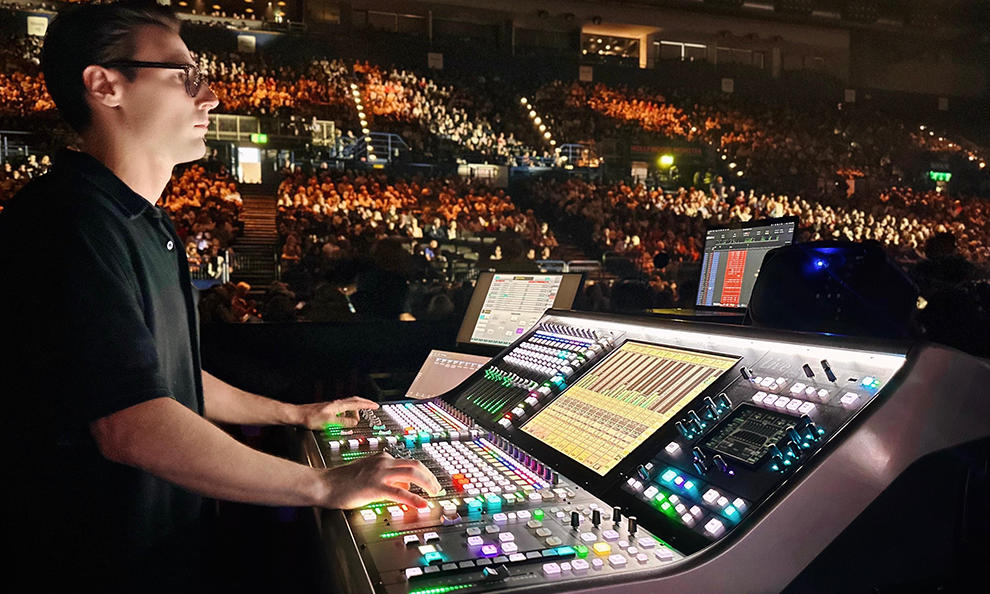
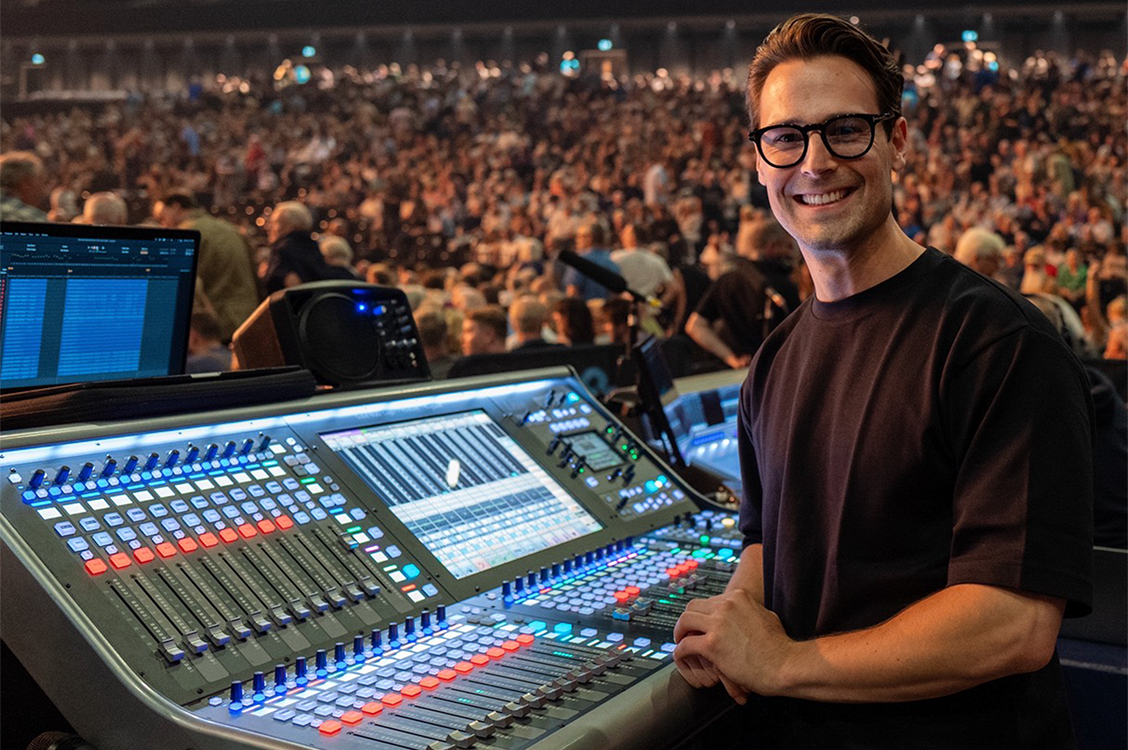
London, U.K., 11th February, 2026 — Chris Hewitt has frequently found himself behind various Solid State Logic studio consoles during his career as a mixer, engineer and musician. He chose to use an SSL Live 550 Plus console when mixing front-of-house for Dhani Harrison’s 2025 tour, which included a performance at Glastonbury Festival, and Arena support dates with Jeff Lynne’s ELO.

“What struck me was how quickly I was able to get to a finished sounding mix with less processing than I would normally use,” says Hewitt, who has been working for Harrison for about two and a half years as production manager, FOH engineer, and studio mixer. “I found that translating the richness of Dhani’s music to the live stage was easier on this console than on anything I've tried before. Some digital consoles get a bit cloudy sounding with busy mixes, and that’s not something that you can fix with processing. With the SSL Live it feels like there's more space to put things in, so all the elements in the mix can breathe a bit more. I put a lot of that down to SSL’s clever 64-bit architecture and mixbus.”


A huge sonic spectrum 

He continues, “When you're mixing an artist like Dhani Harrison, whose music bridges his incredible musical heritage with forward thinking creativity and a huge sonic spectrum, you need a console that can keep up sonically and technically and ultimately be able to deliver the emotional response you're looking for in the music. All SSL consoles have that unmistakable punch, clarity and depth, and for this tour, the L550 Plus was that console. It delivered a sound and workflow that felt less like a tool and more like a musical instrument. I've lived and breathed SSL consoles in the studio for years, so it is always wonderful to be able to take one on the road.”

Hewitt divides his time between working as a record producer and mix engineer at his private studio and as a FOH engineer and production manager when touring. “I’ve had a very varied career so far, which I love! I think the variety keeps me sharp. I've been a system engineer for the likes of Slash and Tom Jones, I mix lots of orchestras and shows like the Hollywood Proms. I currently do front-of-house for Passenger, Fat Boy Slim, Paraorchestra, Jess Glynne and Clean Bandit. I've mixed monitors for the likes of Rufus Wainwright, Rita Ora and Jeff Wayne’s War of the Worlds, and I've got a long history of working in musical theatre. In the studio, I've engineered on a few number one albums and also get to have huge variety there.”

Changing scenes and automation 

Hewitt employed some relatively complex automation on the L550 Plus console for Harrison’s recent shows including multiple scene changes to open and close gates or change the threshold and release times, for example. “Then there were some scenes that opened and closed complete duplicated channels with mutes for different vocal effects or very different EQs. I love the scene snapshot recall. It’s solid, very well laid out and easy to understand when working fast, be it simple or complex.”

He also finds the Live console’s Stems feature particularly useful, as it allows him to bring his recording studio workflow seamlessly into the live environment. “In Pro Tools, for example, a bus can be whatever you want, and that's how my brain works. I don't enjoy fixed architecture digital consoles. I want to be able to throw anything anywhere, anytime, and stems allow me to do that. Having an open architecture means I can be doing a bit of snare drum processing on the channels, then a snare bus, a drum stem, a parallel drum stem, and then a music bus, for example. It all goes through a similar kind of routing to how I would organize a studio mix session. I like using little bits of processing along the way instead having to lean too heavily on one processor, and that’s how I get the transparency and weight of a busy mix under control.”

Hewitt’s workflow in a live setting is similar to the workflow he employs in the studio. “I approach live sound the same as I do when mixing a record, in that I do loads of technical prep first. When I'm able to get the technical stuff out of the way then I can use my creative brain and be in kind of a flow state.” In theatres and on tour, he says, “I typically take a holistic approach to everything audio and oversee the whole department. I work directly with the needs of the artist and the music, from system and audio package design spreadsheets to the most minute details. I think mixing music is all about thousands of micro decisions and, for me, it usually starts with design and planning so that the creative side can be unobstructed and I can focus on doing what I do — being a mixer.”


SSL Live: Intuitive, responsive and comfortable 

For all the sophistication that the Live console offers through its rich feature set, he comments, “The layout is intuitive, responsive and comfortable, especially in high-pressure environments.” Further, he adds, the Live console provides easy-to-read visual feedback in the heat of the moment, from the individual LCD displays above each fader to color-coded channels. “You don't have to decode any of the information that the console is giving you. I know that my drums are always blue, and my bass is always red, for example. As minor as this sounds, larger text and clearer visuals than other live consoles means you can have your eyes on the stage then glance down very quickly and it's all right there. I haven’t got time to stare at small details on screens in the heat of a show.”

On a typical tour Hewitt would have relied on a rack of outboard gear to add saturation, compression and reverb, including SSL's Fusion and THE BUS+. SSL Live’s on-board Effects Rack changed that: “I found myself using very little outboard with Dhani. Having so much familiar processing in the console is brilliant. I feel like all the processors in the console are very powerful — all the onboard tools, dynamics, reverbs, dynamic EQs, the new Sourcerer plug-in and some of the plug-ins that SSL are now implementing from the studio world are all so usable.” That said, Hewitt was running an outboard plug-in server. “But most of the things on there were actually more SSL channel strips!” he laughs.

Related Media